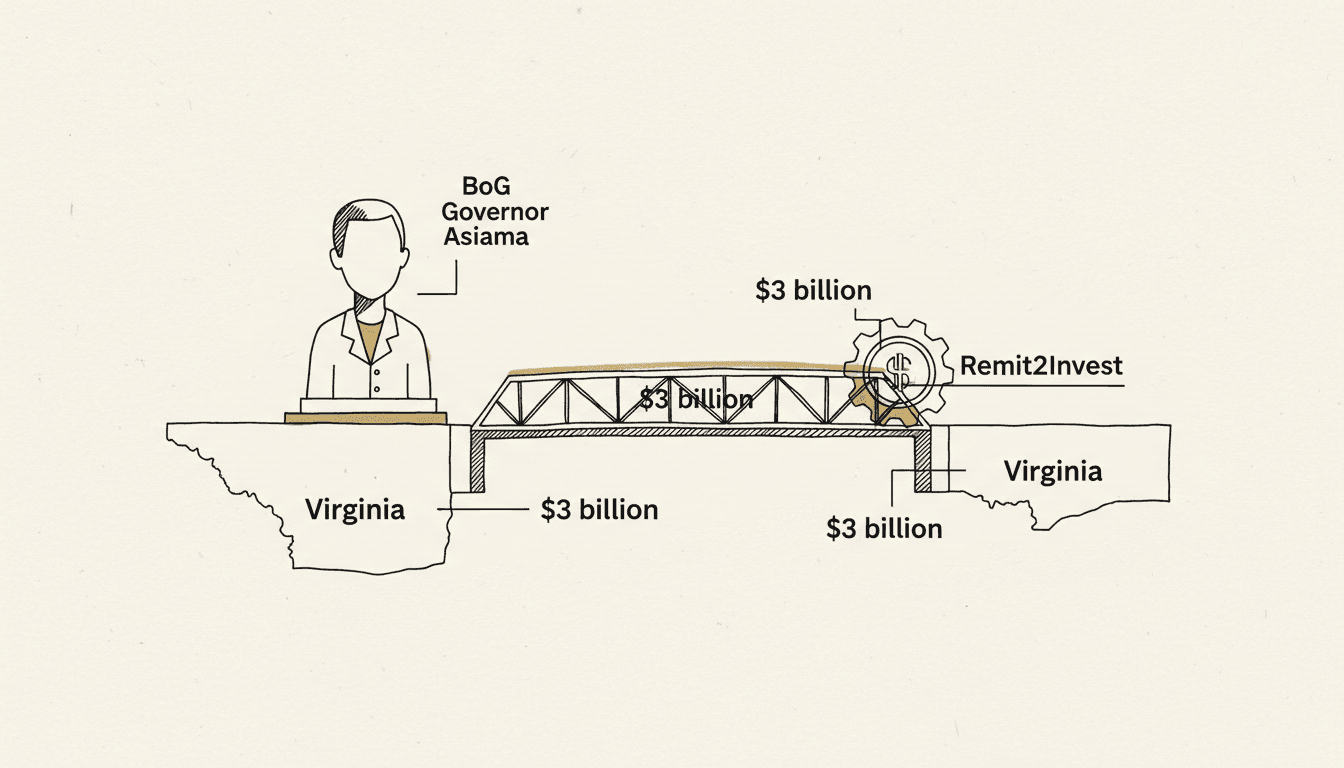
Bank of Ghana Governor Johnson Asiama hosted a diaspora engagement forum titled "The Central Bank Bridge: Remit2Invest" at the Alexandria Hilton in Virginia on 19 April. The event brought together BoG technical experts, commercial bank representatives, and officials from the Ghana Investment Promotion Centre.
The stated goal is to transform remittance inflows into long-term investment capital. Asiama framed diaspora funds as potential patient capital for productive sectors rather than consumption spending.
Ghana received approximately $3.09 billion in remittances in 2025, representing 3.7 percent of GDP. The vast majority flows into household consumption, education, healthcare, and real estate. The structural challenge is that remittances enter as foreign exchange — which helps the current account and supports cedi stability — but exit the productive economy almost immediately as spending rather than circulating as investment.
The forum discussed practical investment opportunities, available financial instruments, and which sectors are most ready to absorb diaspora funding. Specific instruments and sectors were not disclosed publicly.
The Virginia forum is part of the same international engagement arc that took Finance Minister Ato Forson to the IMF Spring Meetings the same week. Asiama is selling a different audience the same story: Ghana's macro recovery is real, the cedi just posted its best Q1 in six years, reserves are at $13.83 billion, and inflation is at 3.2 percent. The question for the diaspora is whether the macro stability translates into investable products with credible returns and exit options.
The Gulf crisis adds urgency to the remittance channel. Ghanaian workers in the UAE, Qatar, Bahrain, Kuwait, and Saudi Arabia face employment uncertainty as the conflict compresses GCC economic activity. If remittance flows from the Gulf slow, the diaspora investment thesis becomes both more important and harder to sell.