That is how much the cedi depreciated against the dollar in Q1 2026, the smallest first-quarter loss in a six-year data set.
Q1 depreciation has fallen from 20.6 percent in 2022 to 12.7 percent in 2023, 10.8 percent in 2024, 5.5 percent in 2025, and 4.4 percent this year. The six-year Q1 average is 8.7 percent.
The cedi traded within a 54-pesewa range in Q1 2026, between GH¢10.46 and GH¢11.00, and closed March at GH¢10.98. The interbank rate as of 15 April sits at approximately GH¢11.04 buying and GH¢11.05 selling.
For a currency that hit GH¢15.53 per dollar in early 2025 before recovering 40 percent through the year, Q1 2026 looks like stabilisation rather than appreciation.
The gains are holding.
What is doing the work
Three things.
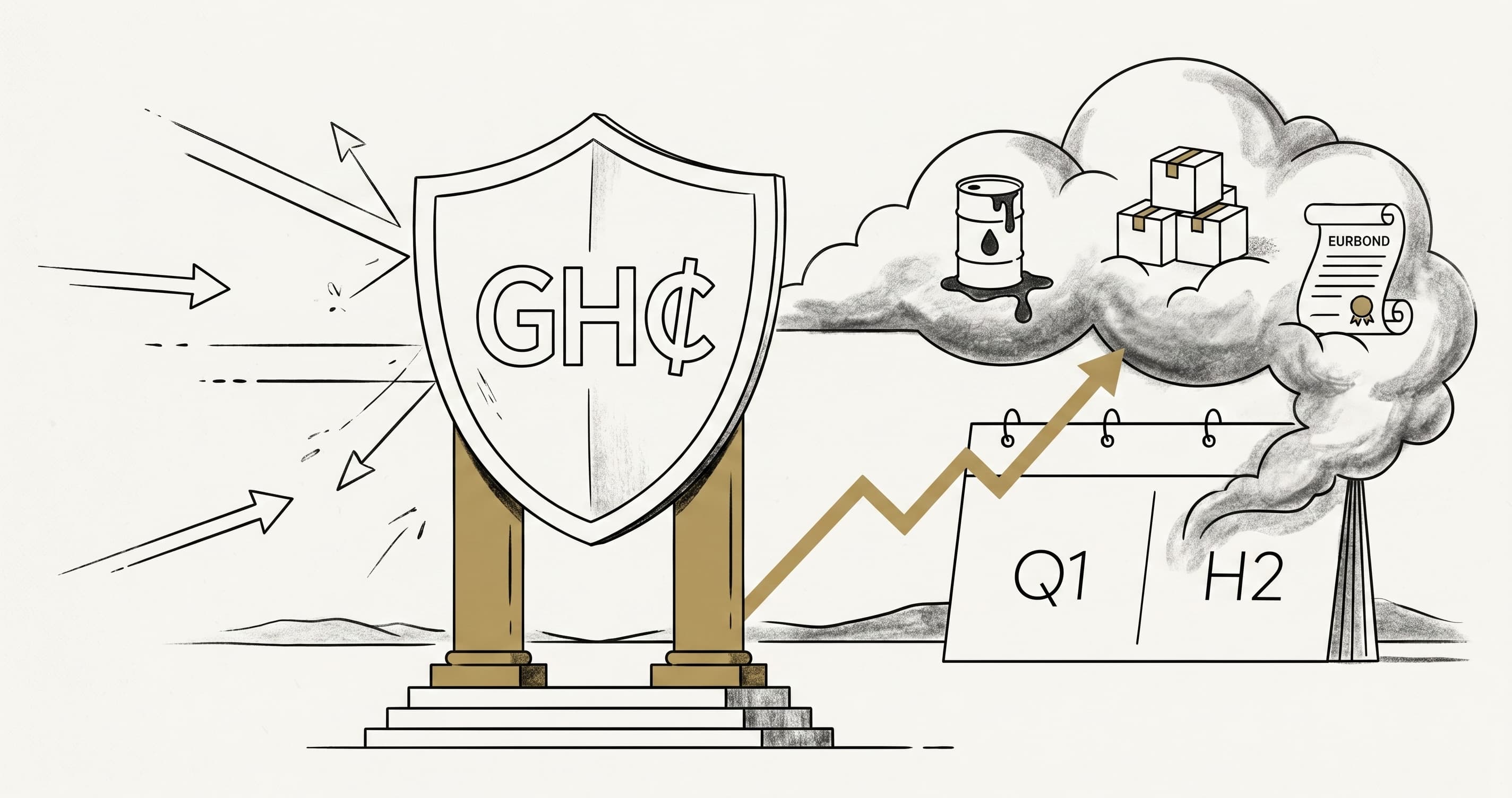
Gold exports doubled to $20 billion in 2025, and the Bank of Ghana's Domestic Gold Purchase Programme injected approximately $10 billion into the foreign exchange market.
Gross international reserves reached a record $13.83 billion by end-2025, up from $9.1 billion at the start of the year.
And the policy rate cuts — 900 basis points through 2025 plus another 400 in Q1 2026, bringing the rate to 14 percent — have lowered domestic financing costs without triggering currency flight.
The GoldBod transition matters for what comes next. From January 2026, the BoG exited small-scale gold trading under the DGPP, handing operational control to the Ghana Gold Board. GoldBod is targeting GH¢15 to 20 billion in working capital and has secured approximately $300 million in off-taker prepayment. Monthly inflows are estimated at GH¢750 million. Whether GoldBod sustains the forex injection that the BoG programme delivered in 2025 is the single biggest variable for cedi stability in H2.
The H2 warning
Black Star Group projects the cedi at GH¢12.60 to GH¢12.85 by year-end, representing approximately 15 percent depreciation from current levels. Databank forecasts 7.2 percent full-year depreciation, ending at GH¢12.85.
Fitch Solutions projects 8 percent, below the long-term average of 10.2 percent.
The pressure points are seasonal: bulk import demand, energy-sector foreign exchange payments, and upcoming Eurobond obligations. The Gulf crisis adds a wild card — oil prices surged 94.5 percent in Q1, the strongest quarterly move in six years. Gold gained 7.06 percent in the same period, partially offsetting the oil shock.