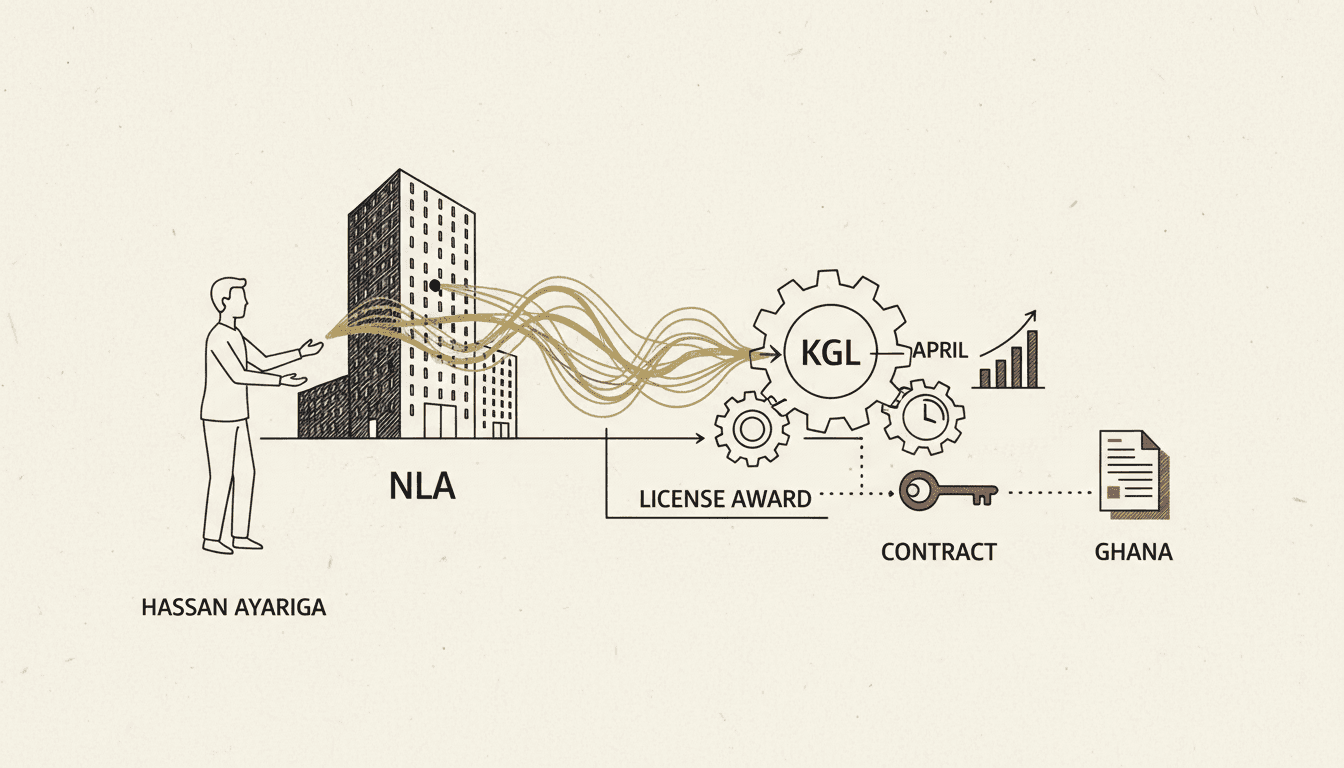
All People's Congress founder Hassan Ayariga released a statement on 22 April calling for the total dismantling of the monopoly governing Ghana's digital lottery, backing President Mahama's review of the NLA-KGL contract but arguing the review does not go far enough.
Ayariga said no single private entity should wield such disproportionate control over a national revenue-generating asset. He said Ghana cannot afford selective enforcement of its own legal framework. He argued the exclusivity arrangement between the National Lottery Authority and KGL Technology Limited stifles innovation and excludes capable Ghanaian businesses, and that the structure may violate the National Lottery Authority Act by transferring operational dominance and financial control to a private company.
The APC issued four specific demands. Terminate the exclusivity clauses. Open the digital lottery ecosystem through competitive licensing. Ensure revenue accountability under NLA oversight. And guarantee equal opportunities for local tech firms.
What Mahama's committee actually found
President Mahama issued the review directive on 24 December 2025 through a letter from Executive Secretary Dr Callistus Mahama. The review committee reported in April 2026 that the current agreement terms are not illegal, but that the revenue-sharing structure is not financially advantageous to the Republic. Mahama ordered immediate renegotiation.
The financial concern is specific. KGL's gross lottery revenue in 2024 was GH¢3 billion. The NLA received GH¢157.6 million — 5.2 percent. Under the original 2019 contract terms, the NLA would have received GH¢600 million at 20 percent of gross.
KGL Group Executive Chairman Alex Dadey announced on 16 April that the company would pay GH¢153 million in corporate income tax and welcomed the renegotiation directive, saying periodic renegotiation is already part of the contract.
The distance between the three positions
The government wants the terms renegotiated. KGL says the terms can be renegotiated. Ayariga says renegotiation is the wrong goal — the monopoly itself is the problem, and competitive licensing is the fix.
These are three different ends. A renegotiation that lifts the NLA's share from 5.2 percent to something closer to the original 20 percent would satisfy the first two. It would not satisfy Ayariga, because the structure — one company controlling the digital lottery channel — would remain intact. Whether the government's renegotiation is a reset of economics or a reset of structure is the next question, and it has not been answered publicly.