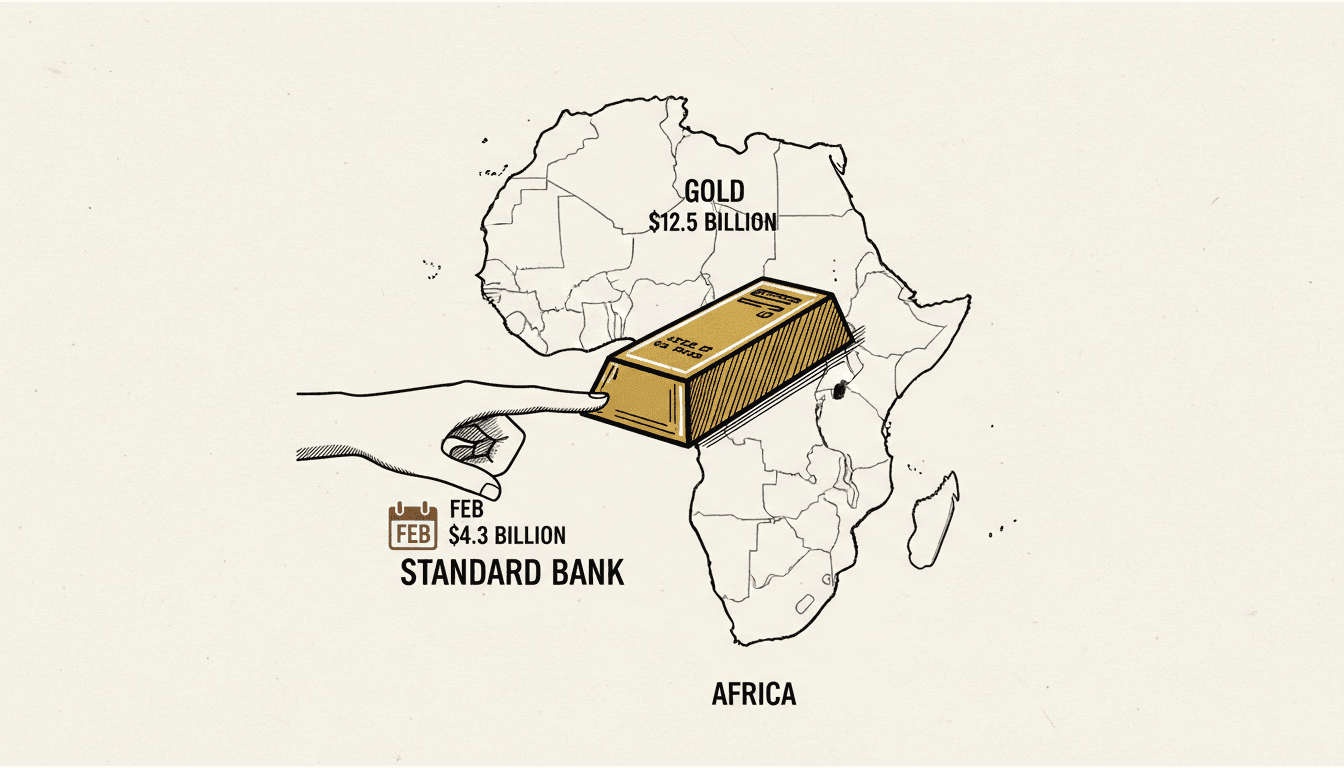
$4.3 billion. That is what Ghana exported in gold in February 2026, up from $2.3 billion in February 2025, according to data cited by Jibran Qureishi, Head of Africa Research at Stanbic Bank, Standard Bank's subsidiary.
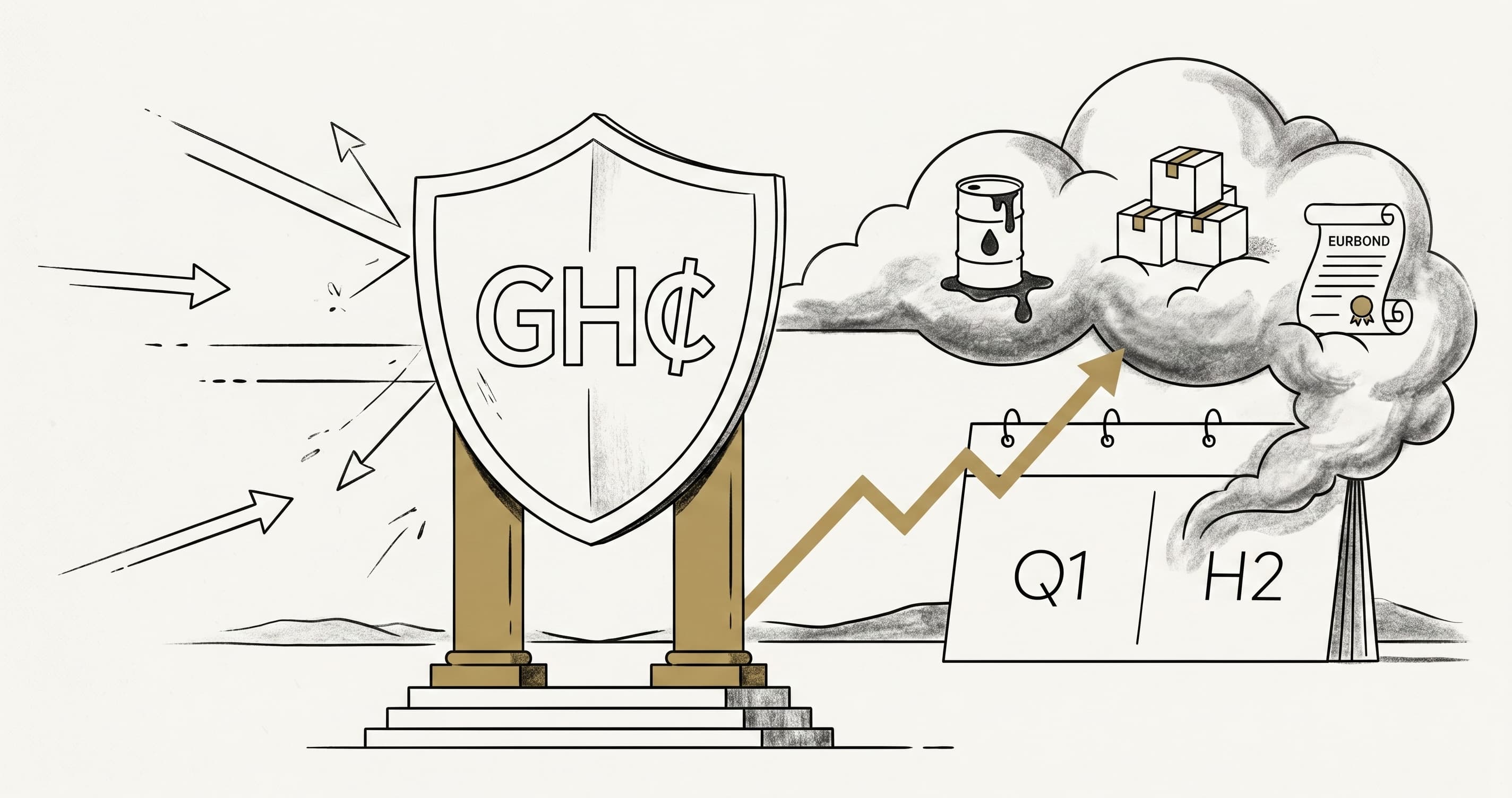
The near-doubling is driven in part by the Bank of Ghana's domestic gold purchase programme, which has expanded the country's gold export pipeline. Qureishi described the gold performance as an important stabilising force that is offsetting the pressure from oil imports.
The oil trade balance tells the other side. February oil imports stood at $852.7 million against oil exports of $451.5 million. Ghana remains a net importer of refined petroleum products, and the Gulf crisis has pushed crude past $120 per barrel. The gold surplus is large enough to absorb that deficit and still leave the external position in better shape than a year ago.
Foreign exchange reserves have risen to approximately $12.5 billion, equivalent to more than five months of import cover. Qureishi said Ghana has made meaningful progress in stabilising inflation, rebuilding reserves, and restoring confidence.
The assessment lands in the same week as Moody's positive outlook revision and S&P's B-/B stable affirmation. The analyst consensus is forming: Ghana's recovery is real, gold is the buffer, and the risk is oil.