That is Moody's current assessment of Ghana's sovereign credit, affirmed in April 2026 with the outlook revised upward from stable. The rating itself did not change. What changed is the direction Moody's believes it is heading.
The significance is in the comparison. S&P affirmed Ghana at B-/B stable on 8 April. Fitch upgraded to B- stable in June 2025.
Both of those are roughly equivalent to Moody's B3, which is two full notches above where Moody's currently sits.
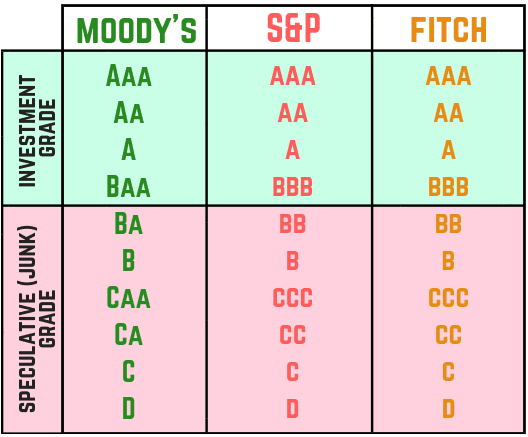
The positive outlook is Moody's signal that it sees a path to closing that gap over the next 12 to 18 months.
What moved the outlook
Moody's cited four factors. Declining domestic financing costs amid monetary easing. An improved fiscal position. The resumption of domestic bond issuances. And specifically, Ghana's first 7-year bond since the Domestic Debt Exchange Programme (DDEP).
That bond is the catalyst worth understanding.
On 30 March, the government launched a GH¢2.7 billion 7-year instrument at a 12.5 percent coupon, the first medium-to-long-term domestic bond since the DDEP imposed a three-year moratorium on new issuances in 2023. The moratorium expired on 2 March 2026. The bond received GH¢3.1 billion in bids — oversubscribed. It settled on 7 April and is now listed on the Ghana Fixed Income Market.
The government plans GH¢10 billion in infrastructure bonds for 2026 under a programme it calls the Big Push: two GH¢5 billion tranches in Q2 and Q4, structured as 10-year and 15-year instruments.
The rate cut sequence
The Bank of Ghana has cut the policy rate from 29 percent to 14 percent since the easing cycle began.
The full sequence: 29 to 27 percent in September 2024, a hike back to 28 in March 2025, then sustained cuts — 25, 21.5, 18, 15.5, and 14 percent by March 2026. Total easing from peak: 1,500 basis points.
And whiles all this was happening, inflation fell in parallel. From 23.5 percent in January 2025 to 3.2 percent in March 2026, fifteen consecutive months of decline. Food inflation sits at 2.3 percent. Imported goods are in deflation at negative 0.6 percent.
What keeps Moody's behind
The constraints Moody's named are still real. Ghana still has limited government financing options beyond the newly reopened domestic market. There is still a weak debt affordability — interest payments have fallen from 48 percent of revenue in 2021 to 25 percent, but that is still high. Exchange rate and commodity price volatility. And the Gulf crisis as an active risk factor, even though Ato Forson and the rest of the John Mahama-led government is doing their best to allay fearss.
The 2027 Eurobond wall; up to $2 billion in redemptions; is the structural test for Ghana. The government met its $1.4 billion in 2025 Eurobond obligations and has $1 billion scheduled for 2026. Whether it can service the 2027 wall without external market access at reasonable rates is the question Moody's will answer with its next rating action.
Debt-to-GDP is projected to fall below 60 percent by end-2026, down from 93 percent at the 2022 peak. The IMF programme runs through August 2026 after a three-month extension. The fifth review was completed in December 2025 with all targets met.
So, Ghana's recovery is real, the fiscal discipline is holding, and the risk is whether it survives the next external shock.
What all the different agencies disagree on is how much credit to give it today versus how much to wait.