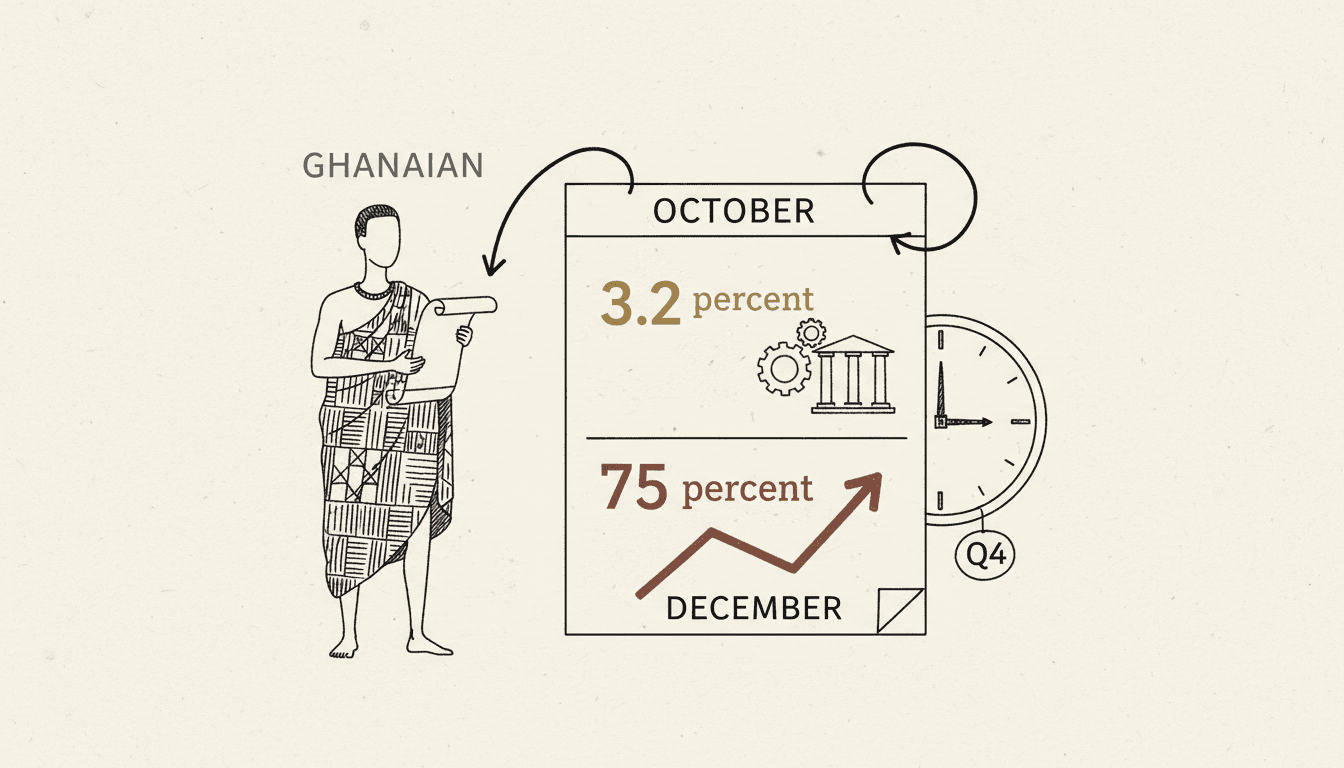
Three million. That is the number of Ghanaians classified as food insecure — poor or borderline consumption — according to the Ghana Statistical Service's Mobile Vulnerability Analysis and Mapping report for October to December 2025, released on 22 April.
The report, issued under Government Statistician Dr Alhassan Iddrisu, puts 91 percent of the population — roughly 30 million people — at acceptable consumption levels. But the breakdown beneath that headline is where the story sits.
The coping data
Nearly one in three households adopted medium-to-high coping strategies. One in four engaged in crisis or emergency coping — reducing portion sizes, switching to cheaper foods, borrowing, selling productive assets, and cutting health or education spending. Only 1.5 percent of households received any form of assistance.
Vulnerability is geographically concentrated. North East, Northern, Upper East, and Upper West regions show the highest rates. Rural households sit at 11 percent poor or borderline consumption. Urban households sit at 4 percent.
The income-share data
One in five households now spends more than 75 percent of income on food. Among households relying on small or medium-scale farming, 16.9 percent experience poor or borderline consumption — roughly six times the rate seen in households whose primary livelihood is trading or salaried work. Over 90 percent of households unable to access markets cited lack of money as the primary reason.
The GSS quote: "Coping is not neutral. It reflects a drawdown on resilience and signals that households are managing today at the cost of tomorrow."
The education data
Households headed by individuals with no formal education are nearly 10 times more likely to face poor or borderline consumption than households headed by someone with tertiary education. 23.4 percent of households with uneducated heads are food insecure. Over 40 percent of them adopt medium-to-high coping strategies.
The macro mismatch
Ghana's headline inflation is 3.2 percent, the lowest since the 2021 CPI rebasing. Food inflation is 2.3 percent. Monthly food prices actually fell 0.3 percent in the last reading. The cedi just posted its best Q1 in six years. Gold exports hit $20 billion. Moody's revised the sovereign outlook to positive.