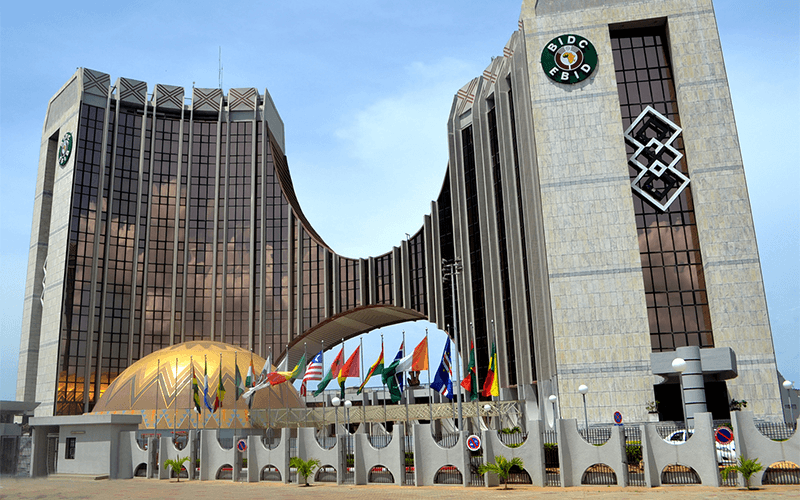
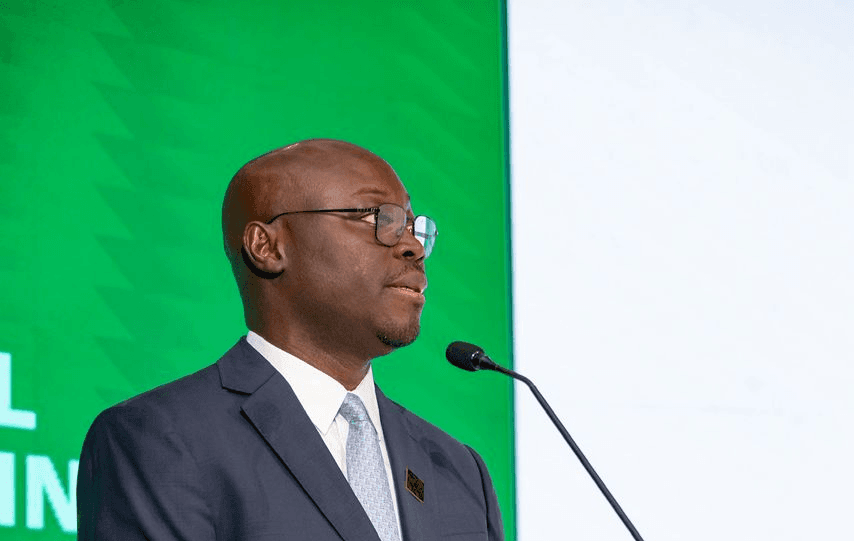
The finance minister hosted the 24th Annual General Meeting of the ECOWAS Bank for Investment and Development in Accra this week, and used his welcome address to name the member states that are paying the regional bank what they owe it.
The list was short: Ghana, Côte d'Ivoire, Guinea, and Togo. Four out of fifteen ECOWAS members.
The number Cassiel Ato Forson put on the shortfall is $256 million in outstanding arrears. EBID received $102.5 million in capital payments in 2025. The 2022 decision to raise EBID's authorised capital to $3.4 billion included a third tranche subscription call of $411.4 million, due to be fully paid by December 2025.
That deadline passed four months ago without the full payment arriving.
"In light of the missed December 2025 deadline, I urge all Member States to act with renewed commitment in fulfilling their obligations to the Bank," the minister said. He called the payments "critical" to EBID's leverage, its growth, and its impact across the region.
In a separate intervention during the welcome address, he said the expectations of the region's citizens were high and that the AGM's value would depend on the commitments implemented after the gathering rather than the deliberations during it.
The argument is straightforward on its face and more complicated underneath. EBID is the financing arm ECOWAS reaches for when it wants to underwrite regional integration projects: transport corridors, power interconnectors, SME credit lines in markets where commercial lenders are priced out.
Without member states honouring capital subscriptions, the bank's balance sheet cannot absorb the kind of long-tenor infrastructure paper it exists to finance. Every missed tranche becomes a ceiling on the next round of approvals.
The choice of Accra as host venue for this particular speech is not incidental. Ghana exited a sovereign default and completed a bilateral and commercial debt restructuring inside the last two years, and Ato Forson is now the West African finance minister most publicly associated with that recovery.
Ghana's newly constituted Fiscal Council and the policy rate now at 14 percent are both pieces of that same story — a country rebuilding its credibility with external creditors and trading on it in regional finance conversations.
The domestic angle sits next to a regional one.
EBID's SME credit lines historically have been a route the Ci-Gaba Fund of Funds and other local SME financiers cross-reference when stacking their own capital structures. The Ci-Gaba fund reached a $35 million first close earlier in the quarter, with EBID financing one of the reference cases cited in the fund's investment thesis.
A constrained EBID balance sheet becomes the visible limit on what the fund's downstream co-investors will be willing to commit alongside.