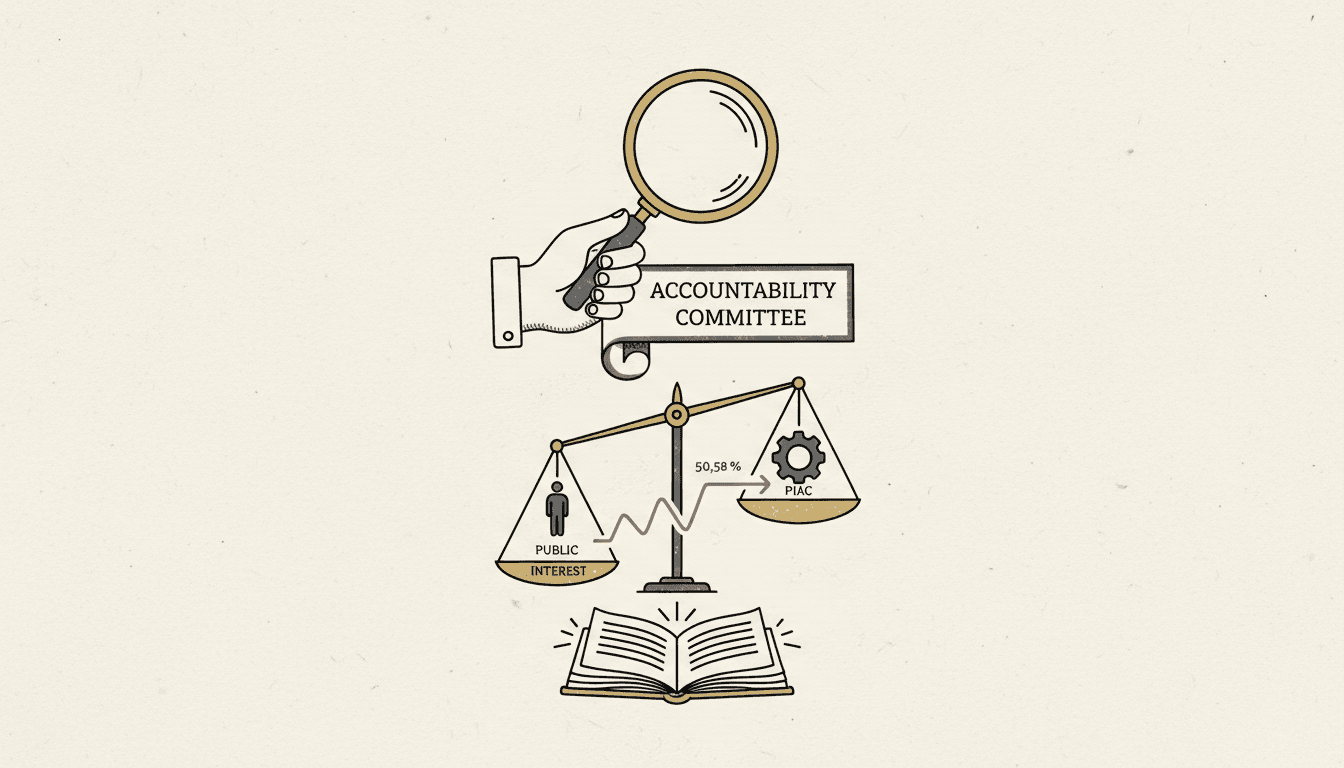
The Public Interest and Accountability Committee has called on the government to invite new investors into Ghana's oil and gas sector to explore fields beyond the three currently in production. PIAC Chairman Richard Ellimah made the call alongside the presentation of the committee's 2025 annual report on oil and gas proceeds. The call is the direct consequence of what the report's production numbers make unavoidable: the existing producing fields are in what the committee itself describes as "their weak stages and struggling to increase output."
The 2025 production decline is the steepest on record since Ghana began commercial oil operations in 2010.
Ghana Group crude oil receipts, the core government revenue line from oil sales, fell from approximately $843 million in 2024 to $416.878 million in 2025. That is a 50.58 percent year-on-year drop. Total petroleum receipts, which include Ghana Group plus the Carried and Participating Interest revenue and other streams, fell 43.27 percent across the same period. The TEN field contributed zero inflow during 2025 due to delayed lifting schedules. Jubilee and SGN were the two fields generating the year's production.
The combination of those three data points is what Ellimah's call is really about. A petroleum sector that was generating close to $12 billion cumulative since 2011 is now producing at approximately half the peak year's rate, with one of its three production fields delivering no revenue in a full calendar year. The remaining two fields are on the declining side of their production curves. Without new fields coming online, the cumulative production number from yesterday's 694-million-barrel report will grow more slowly every year, and the fiscal allocations that depend on the oil receipts will shrink in parallel.
The government response has not been published. The PIAC call is on the record. The specific mechanism by which "new investors" would be brought in is the part of the conversation the committee has not yet specified. The candidates are the usual ones.
The first mechanism is the licensing round. Ghana's Petroleum Commission can open new offshore blocks for bidding under the existing Exploration and Production Act framework. The last competitive licensing round closed in 2018. The next one has been discussed publicly but has not been scheduled. Opening the round would be the cleanest way to bring new investors in, but it requires months of regulatory preparation and a realistic assessment of which blocks would attract bids at the current oil price and the current sovereign risk profile.
The second mechanism is direct negotiation with existing international oil companies that already operate in the region. Tullow Oil, Kosmos Energy, and Eni are the anchor tenants in Ghana's existing production. A direct approach to one of them to extend exploration activities in adjacent blocks would be faster than a licensing round but would raise competition concerns and likely attract Parliament committee attention. The would be the institutional voice most likely to flag a direct negotiation of that kind for public scrutiny.