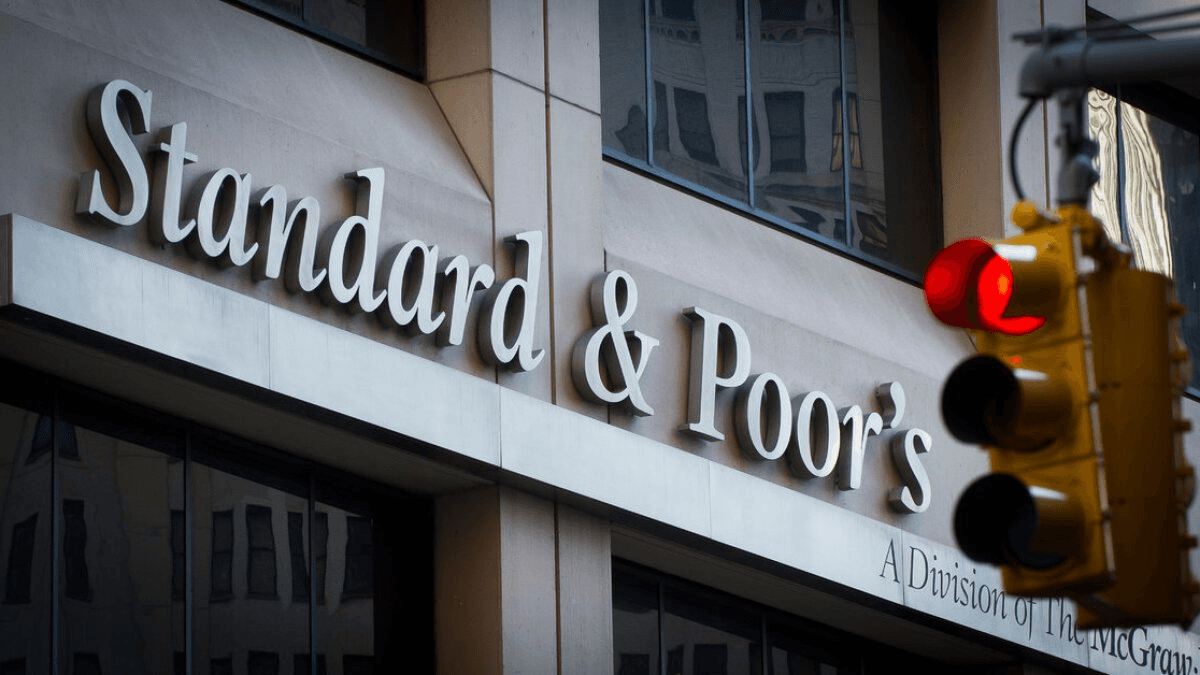
S&P Global Ratings affirmed Ghana's long- and short-term foreign and local currency sovereign credit ratings at B-/B and held the outlook at stable.
The action confirms the rating set after the country's debt restructuring closed and is the second consecutive review at this level. The agency's release walks through what it sees on both sides of the ledger and is more useful than the headline.
On the positive side: stronger economic growth, rising export volumes led by gold, a current account surplus of $9.35 billion in 2025 (8.1 percent of GDP), and gross international reserves at a record $14.5 billion. Ghana's debt restructuring is now substantially complete, with agreements in principle covering about 97 percent of eligible debt, including $13.1 billion in restructured Eurobonds. Those are the credit positives the agency cited.
On the risk side, S&P named six things, and all six are decisions or vulnerabilities the country either controls or has experience managing.
One. Vulnerability to global shocks, particularly Middle East tensions driving fuel and transport costs. This is the only item on the list that is genuinely external.
Even here, the country's exposure is partly a function of how much energy import cover the cedi can absorb without slipping, which loops back to fiscal and reserves variables.
Two. High debt servicing costs consuming significant government revenue.
This is the structural inheritance from the pre-default period and the 2022 restructuring, and it improves only as the restructured debt amortises and as fresh borrowing stays inside the IMF programme's quantitative targets.
Three. Structural weaknesses in public financial management. The agency does not name specific weaknesses, but the standard list includes contingent liability tracking, state-owned enterprise oversight, procurement integrity, and the ability to forecast revenue realistically against tax-policy changes.
The recently appointed Fiscal Council is the institutional response to exactly this concern. Whether the Council does the work it was created for will be one of the variables S&P watches at the next review.
Four. Potential fiscal discipline lapses during election cycles.
Ghana's history of pre-election fiscal expansion is well-documented, and the agency is signalling that it will be looking at the period leading into the 2028 election cycle for evidence the 2024 cycle's lessons were absorbed.
Five. Vulnerability to commodity price declines on gold, cocoa, and oil. Gold is the variable that has carried the country's reserves and current account through the post-default period.
A reversal in the gold price would close several of the credit positives the agency just cited. Cocoa and oil are the other two pillars of the country's export earnings, and both have produced disappointing 2025 numbers in their own right.
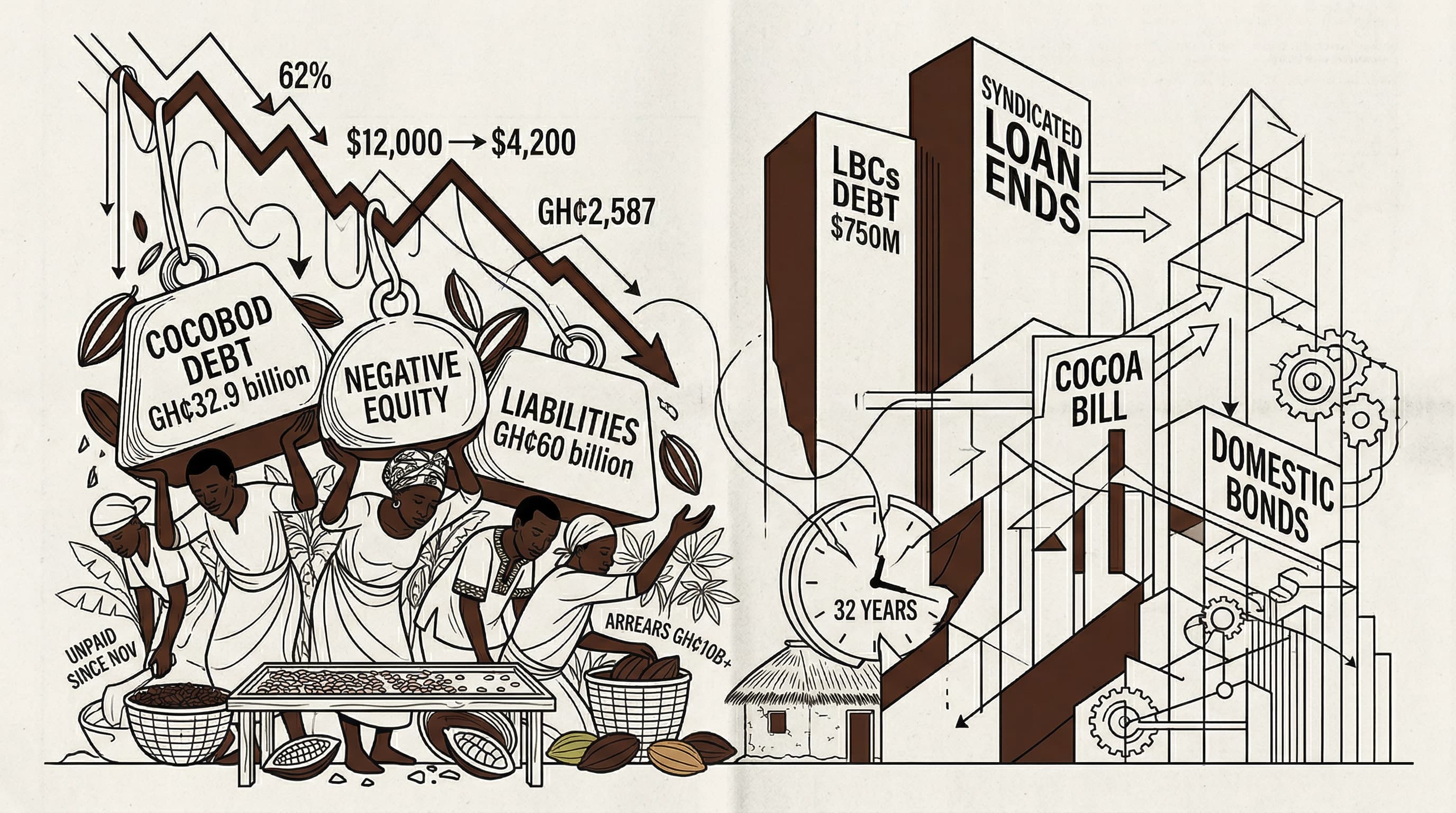
Cocoa output slipped, and the PIAC report on oil production confirmed six straight years of decline.
Six. Inflation upside risk from external pressures. Headline inflation has been the recovery story's most visible win, running through the low threes by March. Imported inflation from energy or food shocks is the channel through which that win could partially unwind.
What the agency did not say is at least as informative as what it did. S&P did not flag the central bank's negative equity position or the BoG's $1.3 billion gold sale as a credit consideration in either direction.
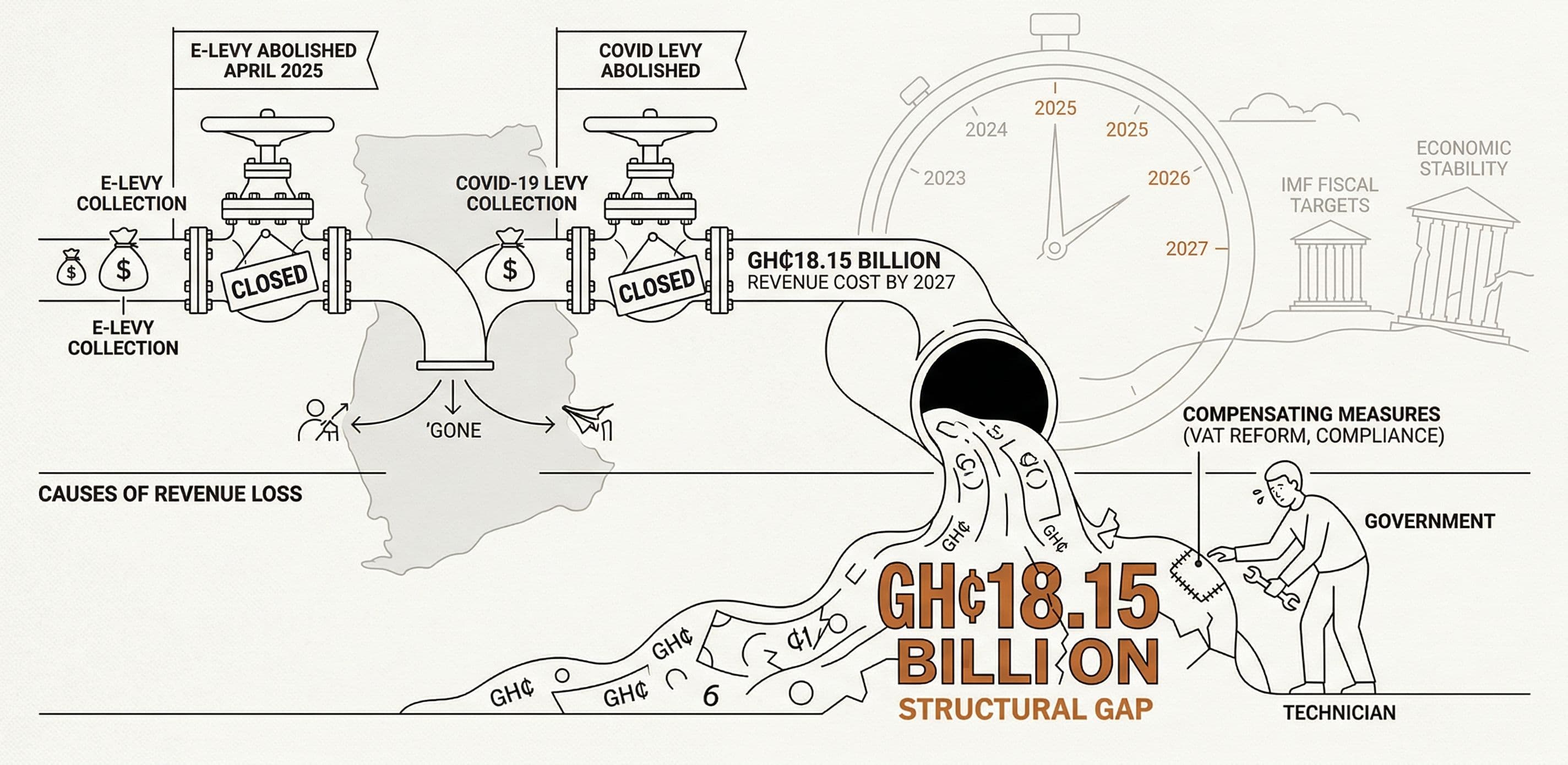
It did not flag the GH¢18.15 billion projected revenue loss from the E-levy and Covid-levy abolitions as a specific concern, even though that number lands directly on the IMF programme's primary balance target.
And it did not name the conditions under which it would consider an upgrade. Only the conditions under which it would consider a downgrade.
The downgrade conditions, in S&P's own framing: rating action could come over the next 12 to 18 months if fiscal reform momentum stalls, if fiscal deficits or debt service costs materially rise, or if the government's ability to refinance maturing debt comes under pressure. That is the boundary the country is now operating inside. The boundary is not narrow, but it is also not abstract.
The political read is that B-/B with stable outlook in April 2026 is roughly the same place the rating sat after the previous review.
Stability is not nothing. It is the rating equivalent of "no surprises." It is also not the upgrade trajectory the country's macro stewards have been signalling internally.
An upgrade requires the agency to see the structural reform list moving from policy commitments to implemented institutional habits. The Fiscal Council, the Public Financial Management amendments, the IMF programme reviews, and the next budget cycle are the documents that produce that evidence. The next S&P review will be where the upgrade question is asked again.