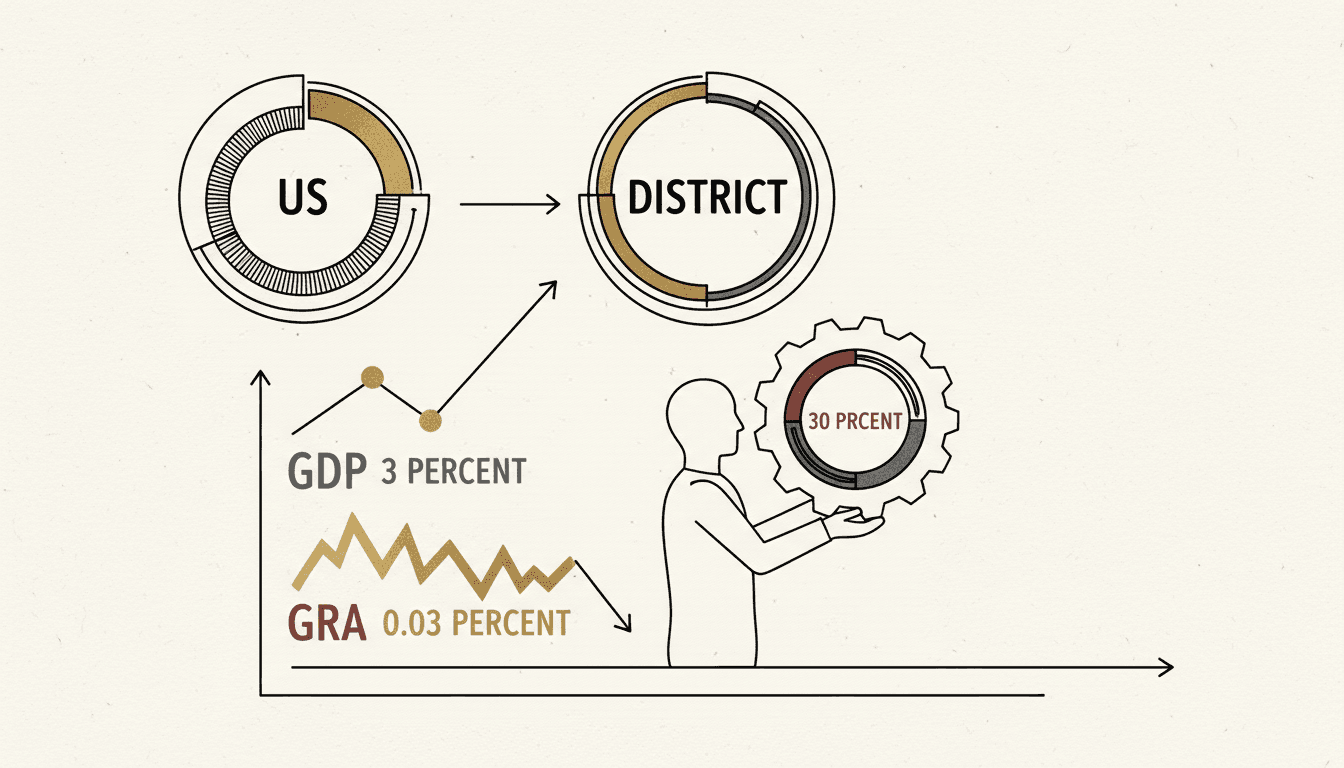
0.03 percent. That is Ghana's property-tax-to-GDP ratio. The United States collects 3 percent. The United Kingdom collects 4.2 percent. The gap is not marginal. It is two orders of magnitude.
District assemblies collect less than 30 percent of their property rate revenue targets. In the Wa Municipality, collection sits below 40 percent. The Accra Metropolitan Assembly budgeted to collect GH¢74.4 million between 2004 and 2015 and actually collected GH¢41.8 million, a shortfall of GH¢32.5 million over eleven years.
Stakeholders at the virtual launch of the Youth Media Advocacy Platform on Property Tax on 11 April — organised by Norsaac, Oxfam in Ghana, and the Media Foundation for West Africa — called for digital property databases, transparent revenue utilisation, and flexible payment systems.
The database gap
The numbers from the GRA's Unified Common Property Rate Platform, launched in January 2023, explain both the problem and the opportunity. Before the platform, only 1.3 million properties paid rates. The GRA subsequently identified 10.12 million billable properties — an increase of 8.82 million. The expected annual revenue jumped from GH¢56 million to a projected GH¢1.77 billion. The platform accrued over GH¢20 million in its first three months through voluntary compliance alone.
Conservative estimates suggest Ghana could raise GH¢5 billion annually from property rates if collection is maximised. AMA alone could raise GH¢2 billion under an effective regime.
The structural dependency
Metropolitan, municipal, and district assemblies generate on average only 20 percent of their total budgets from internally generated funds. Close to 80 percent comes from central government transfers and donor support. Most assemblies depend on the District Assemblies Common Fund for development projects rather than their own revenue base.
The factors behind poor collection are well documented: inadequate logistics, insufficient collectors, poor supervision, under-declaration of revenues, corruption, political interference, and the absence of digital property records. The VNG International TREE Project, which operated across 33 assemblies from 2018 to 2023, demonstrated that technology reduces the number of days needed to issue demand notices by 57 percent and that efficiency gains outweigh costs by a factor of nine.
The revenue is there. The properties exist. The billing infrastructure is being built. What remains is the political commitment to enforce collection at the local level, where the incentives to avoid confrontation with ratepayers are strongest.