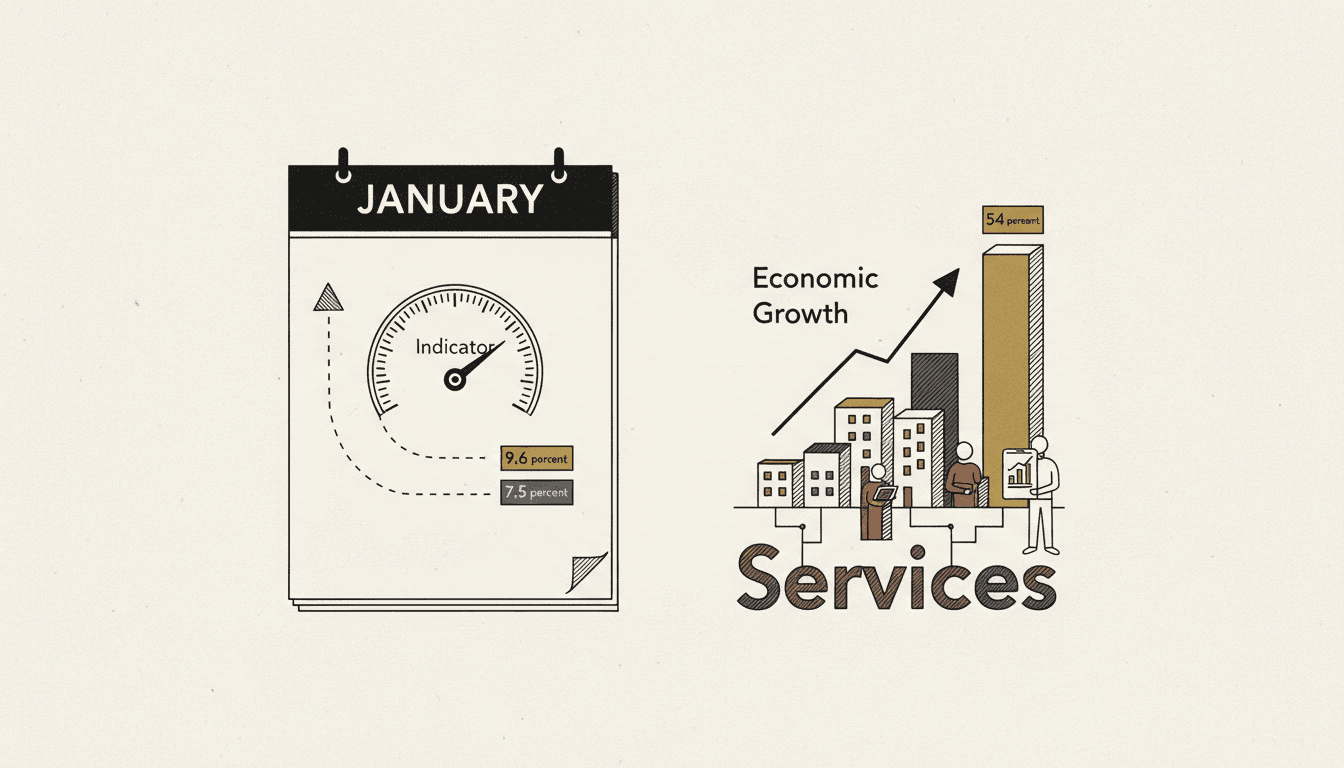
7.5 percent. That is the year-on-year growth rate the Ghana Statistical Service recorded for January 2026 in its Monthly Indicator of Economic Growth, down from 8.2 percent in January 2025. The MIEG index rose to 119.2 from 110.8. All three sectors expanded. The question is which one is carrying the weight.
Services grew 9.6 percent, up from 7.7 percent a year earlier, and accounted for 54.3 percent of total output growth. Education and ICT were the primary drivers within the sector. Industry grew 7.2 percent, down from 9.7 percent, pulled lower by weakness in oil and gas within the mining and quarrying subsector. Agriculture grew 4.5 percent, down sharply from 9.3 percent, with the crops and livestock subsectors contributing what momentum remained.
The pattern is clear: services is accelerating while the two sectors that produce physical goods are decelerating. That is not unusual for a post-crisis recovery that is being led by financial intermediation, telecoms, and education spending. But it raises a question about the durability of the headline number as the base effects from 2025's rebound fade.
The MIEG is not GDP
The monthly indicator is a high-frequency volume index, not annualised GDP. It tracks monthly economic activity and publishes only year-on-year comparisons because the underlying data is not seasonally adjusted. It is classified as an experimental statistic and subject to revision.
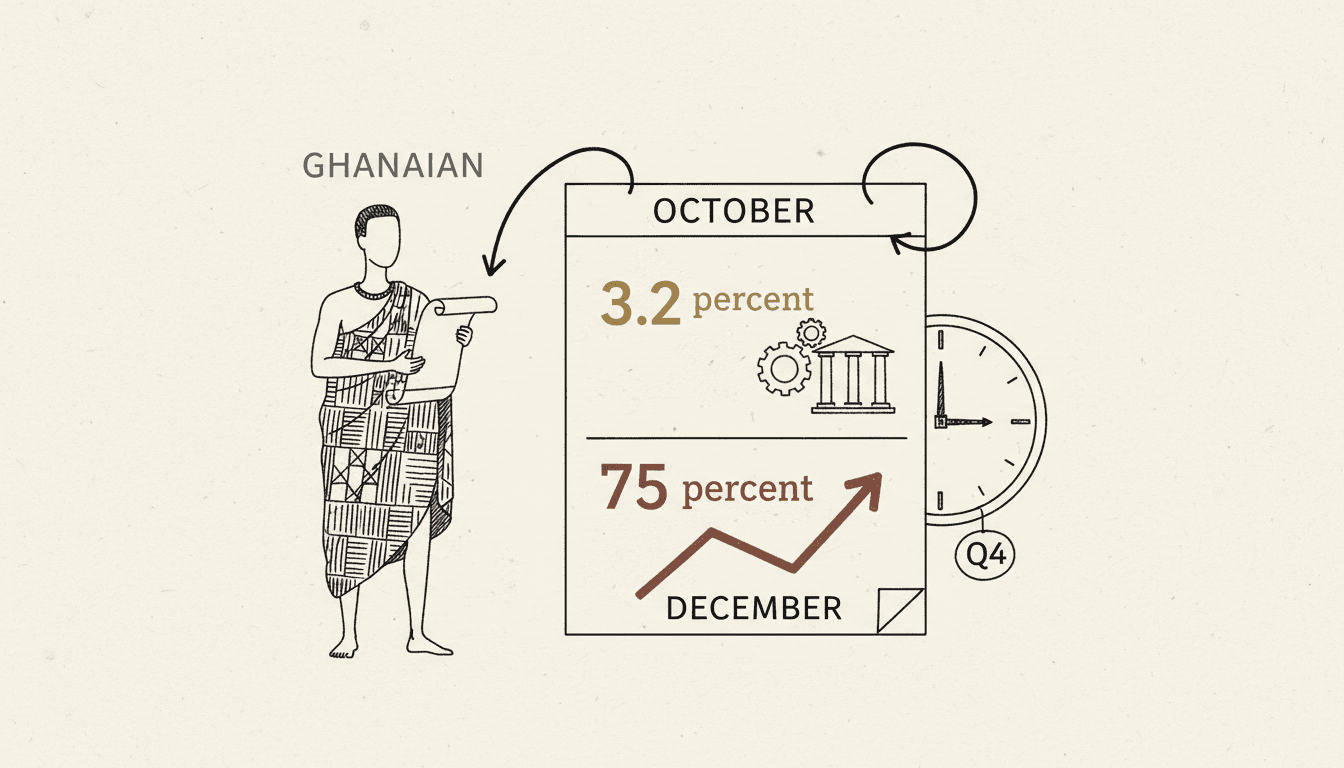
The volatility is the point. In Q4 2025, the MIEG read 3.8 percent in October, 4.2 percent in November, and 10.1 percent in December. The January 7.5 percent is a moderation from the December spike, not a trend break. Full-year 2025 GDP landed at 6.0 percent, which is what the quarterly data produced after smoothing all that monthly noise.
The annual target
The government, World Bank, and IMF all project 4.8 percent GDP growth for 2026. That is a deliberate deceleration from the 6.0 percent post-crisis recovery pace, reflecting a return to sustainable growth after the bounce-back arithmetic of 2025. The January MIEG reading at 7.5 percent sits above that target, but the monthly indicator consistently overshoots or undershoots the eventual annual figure. It is a directional signal, not a forecast.
The services-led composition is the more useful signal. If Ghana's 2026 growth is going to meet or beat 4.8 percent, it will be because ICT, financial services, and education spending sustained their current pace. Whether agriculture and industry recover or continue fading will determine whether the growth is broad enough to generate employment and fiscal revenue beyond the services corridor.