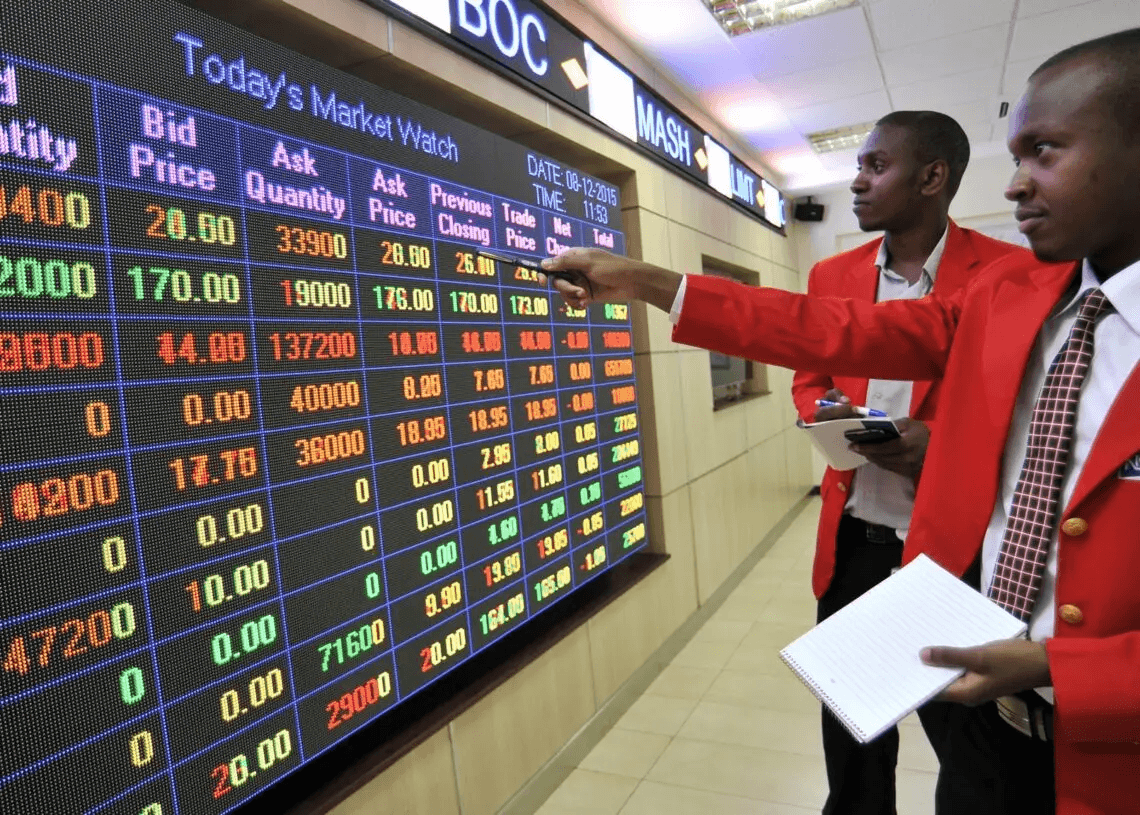
That is what the Ghana Stock Exchange equity market traded in March 2026, across 193.8 million shares.
Year to date, equity volume has reached 562.6 million shares worth GH¢2.78 billion.
The year-on-year comparison is striking: equity volume is up 782.9 percent and value up 441.4 percent against March 2025.
But those numbers are partly a base effect. March 2025 sat in the trough of a market that had not yet priced in the debt restructuring completion. The recovery is real; the percentage gain overstates how far the market has actually moved.
The fixed-income number is the one worth watching. The Ghana Fixed Income Market traded GH¢35.8 billion in March, up 77.1 percent year on year. Government notes and bonds accounted for 55.1 percent of that volume. Treasury bills made up 43.3 percent.
Corporate bonds sat at 1.7 percent, a ratio that has barely changed in three years and tells you everything about the state of corporate debt issuance in Ghana.
Republic Bank led equity gainers at 97.1 percent. Standard Chartered followed at 82.8 percent. Ghana Oil Company rose 80.2 percent. Enterprise Group gained 57.4 percent. Cocoa Processing Company was up 57.1 percent. The top five gainers are all financial services or commodity plays. No tech listing made the board.
On the other side: Societe Generale Ghana fell 37.6 percent. GCB Bank dropped 29.3 percent. Eight stocks declined in total.
The GFIM growth rate matters more than the equity headline. A 77 percent increase in fixed-income trading volume, led by government bonds, signals institutional appetite returning to Ghanaian sovereign paper after the domestic debt exchange. That is the real March story.