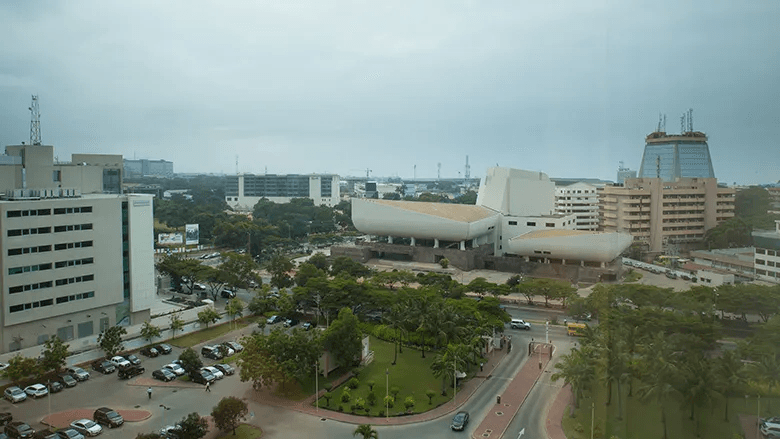
Cabinet approved a $250 million investment to establish a national AI compute centre late last month. That is the single data point about the project that has been made public. Everything else that would normally describe a data centre of that scale (where it will sit, which company will build it, what hardware will be inside it, who is putting up the money, and when any of it breaks ground) has not been disclosed.
The announcement came from Samuel Nartey George, the minister for Communication, Digital Technology and Innovations, at a stakeholder engagement on the country's AI Readiness Assessment Methodology report in Accra on March 31. The engagement was co-organised by UNESCO and funded by the European Union. The minister said the Cabinet approval was "a decisive step in Ghana's path toward a responsible, innovative, and globally competitive artificial intelligence ecosystem." The press release and subsequent coverage went no further on specifics.
A compute centre is a specific thing. The dollar figure is the least informative variable. What actually matters is the hardware: how many GPUs and of what generation, which determines the class of model training the site can support. Nvidia H100 and H200 are the current benchmark for serious AI training and are in short supply globally. The next variable is power, measured in megawatts of sustained draw, which immediately surfaces the question of whether the site will run off the national grid, off dedicated generation, or off solar with storage. The third is cooling, which at AI-training densities is a non-trivial engineering problem. The fourth is the fibre connection, which determines how researchers actually reach the machines. The fifth is location, which determines all of the above.
None of those five variables has been made public. What has been said is that Huawei has expressed interest in participating, though the nature of that participation has not been formalised. That matters because Huawei is already deeply embedded in the country's telecommunications infrastructure through rural telephony contracts and the 5G rollout. A Huawei-led compute centre would fit inside an existing bilateral commercial relationship the country has chosen to maintain. It would also suggest that Nvidia-class AI training hardware is not on the table, because Huawei's Ascend accelerators are the substitute the company has pushed into African deployments since US export controls on high-end silicon tightened.
The financing question is the one with the most downstream implications. $250 million is not a number the government can spend out of current fiscal space. The country is eighteen months into its IMF Extended Credit Facility programme, which imposes specific quantitative targets on public sector borrowing. A capital project of that size would normally show up as a Parliament-approved foreign loan, a public-private partnership structured through the Public-Private Partnership Act, or a grant component of a bilateral package. None of that has been specified. The Minister's team has not said whether the money is new borrowing, repurposed existing allocations, committed development-partner funds, or a structure that has yet to be defined.