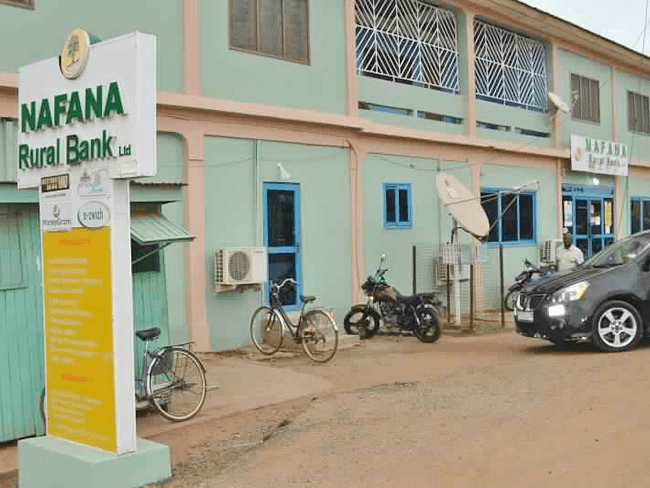
The Bank of Ghana directed all rural and community banks to transition into the new community bank licensing framework by 31 March 2026.
Four have completed the conversion: Nyakrom Rural Bank, Jomoro Rural Bank, Akuapem Rural Bank, and Manya Krobo Rural Bank. The rest of the sector — approximately 140 of the 144 licensed RCBs — has not.
The BoG's microfinance directorate used a B&FT-reported engagement on 13 April to signal that rebranding alone is not compliance. The transition requires minimum paid-up capital of GH¢50 million for existing institutions and GH¢100 million for new entrants, with full compliance due by 31 December 2026. Eligible institutions must communicate their transition intentions to the BoG by 30 June and submit progress reports by 30 September.
The reforms replace the previous Tier 1 to 4 microfinance classification with four categories: Microfinance Banks, Community Banks, Credit Unions, and Last-Mile Providers. Community Banks will operate as licensed deposit-taking institutions serving both rural and urban populations, a broader mandate than the rural-only scope the sector originally carried.
ARB Apex Bank has been repositioned as a central services institution supporting the entire sector rather than functioning as a mini-central bank for RCBs alone.
The reform addresses persistent weak capitalisation, governance deficiencies, and operational inefficiencies. The GH¢50 million capital requirement is the binding constraint — many RCBs operate well below that threshold. Whether the sector consolidates through mergers, raises capital from shareholders, or simply fails to meet the deadline will become visible by Q4.