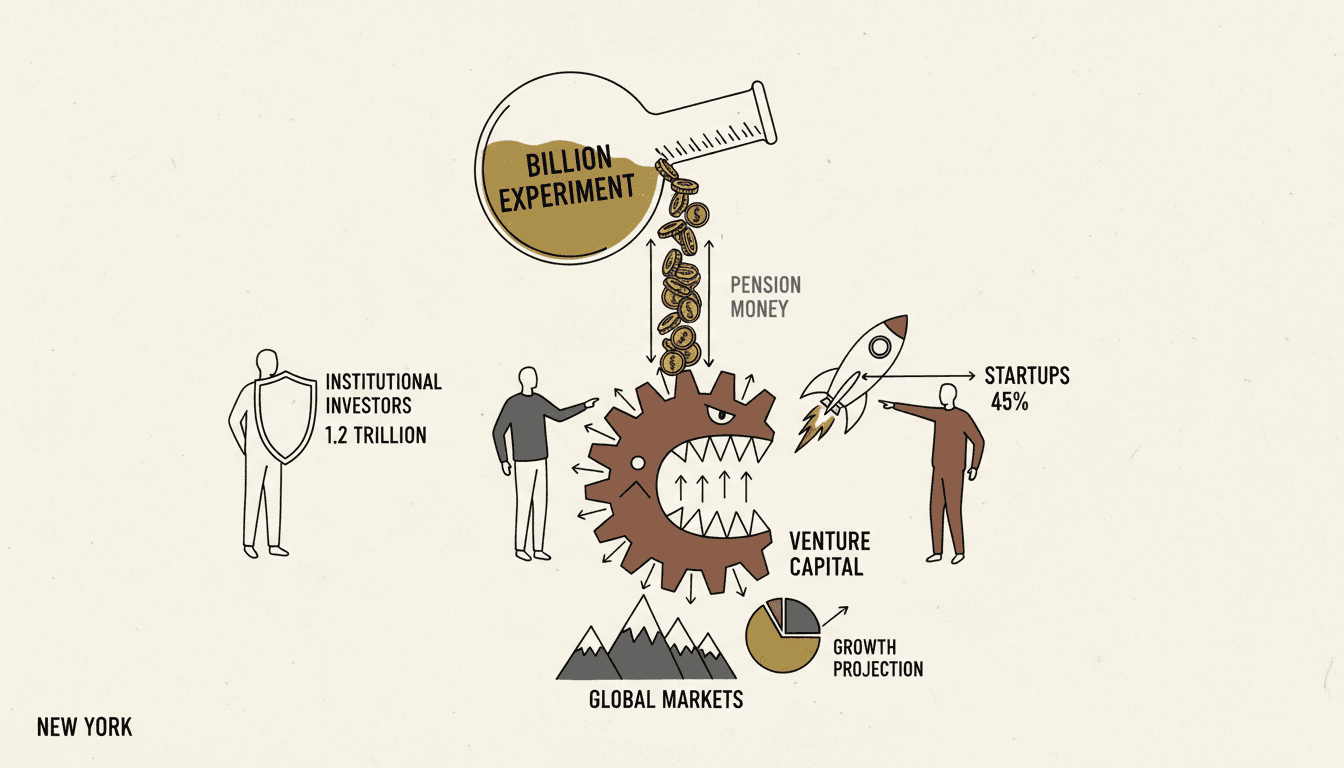
NPRA issued the directive and the directive is now operational. Pension fund managers can allocate up to 5% of assets under management to venture capital and private equity. With GHS 72 billion sitting in pension deposits across the system, that ceiling translates to GHS 3.6 billion in potential deployable capital.
No other country on the continent has done this. Not Nigeria. Not Kenya. Not South Africa. Ghana moved first, and the implications stretch well beyond the startup press releases that followed the announcement.
The logic is sound on paper. Pension funds need returns. Government bonds have been unreliable since the debt restructuring. Equities are thin on the GSE. Real estate is overweight in most portfolios. Alternative assets, specifically venture capital, offer a path to higher returns if managed properly. The directive gives fund managers permission to take that path.
The first vehicle to move is the Ci Gaba Fund, which closed its first round at $35 million. It is structured to deploy into growth-stage companies across healthcare, agribusiness, and technology. These are the three sectors NPRA identified as priorities, and they are the right ones. Healthcare needs capital to build beyond Accra and Kumasi. Agribusiness remains the largest employer and the least funded relative to its size. Technology is where the growth multiples sit.
But between policy and performance, there is a corridor full of hard questions.
The first question is fund manager capacity. Ghana has a small pool of professionals with experience managing venture capital at institutional scale. VC is not private equity. It is not fixed income. The return profiles are different, the timelines are longer, and the failure rates are higher. Pension fund trustees will need to evaluate fund managers on criteria most of them have never used before. The risk of poor selection is real. A few bad bets early could turn political sentiment against the entire programme before it matures.
The second question is deal flow. GHS 3.6 billion is a large number. The current pipeline of investable companies at growth stage in Ghana cannot absorb that volume in any reasonable timeframe. If the money moves faster than the ecosystem can produce quality deals, it will either sit idle or flow into mediocre ones. Neither outcome serves pensioners.
The third question is returns. Pension money carries obligations. Workers expect to retire on it. The timeline for venture capital returns is typically seven to ten years, and many funds do not return capital at all. NPRA set the allocation ceiling at 5% precisely because of this risk, but even 5% of a retiree's future income is not trivial if it disappears.
None of these concerns invalidate the policy. They define the conditions under which it succeeds or fails.
Ghana has done something that required political will and regulatory imagination. The NPRA directive creates a channel between the country's largest pool of domestic capital and its fastest-growing companies. If the fund managers are competent, the deal pipeline deepens, and returns materialise within a decade, this becomes a model other countries study.