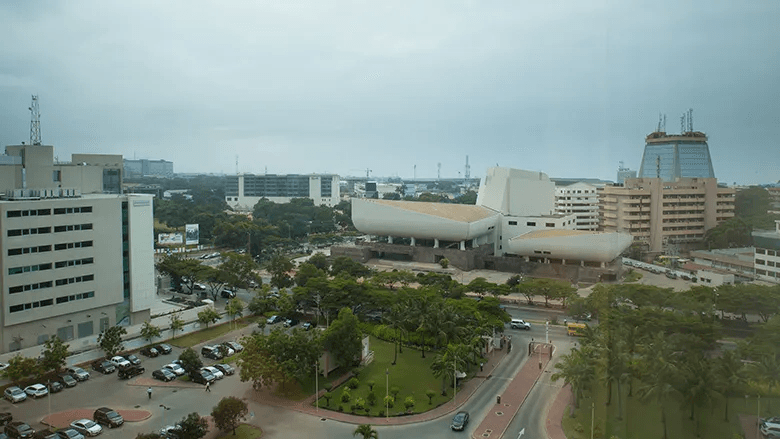
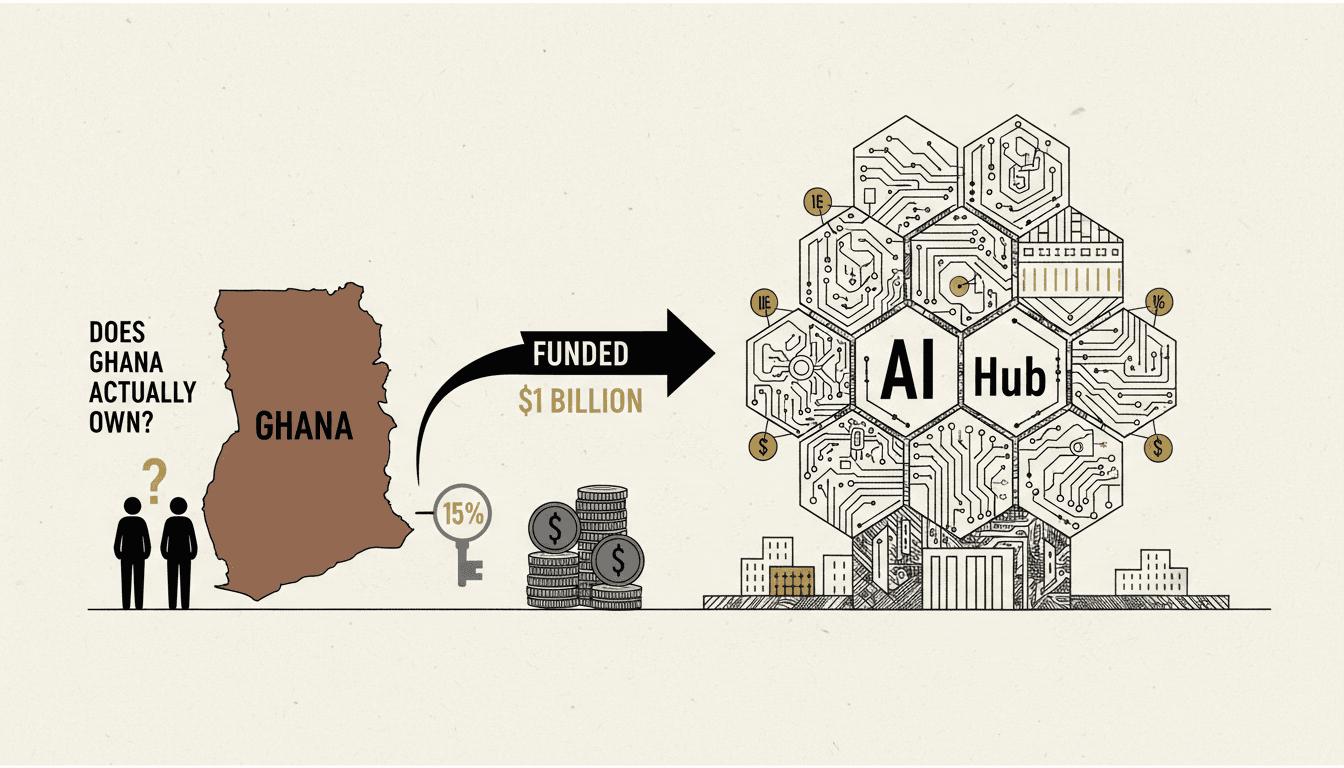
The $1 billion AI and innovation hub in Ningo-Prampram is the largest single foreign technology investment commitment the country has ever received. Dubai's PCFC is funding the entire project. Abu Dhabi's G42 is the technical partner building a $180 million AI compute centre. Ghana's contribution is land, regulatory access, and free zone status.
Local equity in Phase II is capped at 15 percent.
That number deserves scrutiny. A 15 percent cap means that even if the hub succeeds spectacularly, Ghanaian investors capture a sliver of the upside. The structure is closer to a concession than a partnership. PCFC bears the capital risk and retains the majority of the returns. The government's argument is that zero capital outlay justifies the trade-off: the country gets infrastructure it could never build on its own budget.
The scale is real. Phase 1 covers 25 acres within a 25-square-kilometre master plan in Greater Accra. $400 million is earmarked for AI infrastructure alone. The projected numbers are large: 100,000 direct and indirect jobs, a 25 percent increase in FDI within five years. Microsoft, Meta, Oracle, IBM, and Alphabet are named as prospective tenants.
Prospective is doing significant work in that sentence. None of those companies have publicly confirmed tenancy. The hub's commercial viability depends on whether hyperscalers and enterprise tech firms see Ningo-Prampram as a credible base for regional operations. That requires reliable power, low-latency connectivity, a functioning free zone with fast customs clearance, and a talent pool within commuting distance.
Ningo-Prampram is roughly 50 kilometres from Accra's existing tech cluster around the Airport City and East Legon corridor. The distance is not just geographic. The tech workforce, co-working spaces, venture offices, and support services that startups and multinationals rely on are concentrated in Accra proper. Building a second node from scratch is possible but expensive, and it requires anchor tenants who commit early.
The governance structure of the hub has not been made fully public. Who controls zoning decisions within the free zone? Who sets rental terms? Who decides which companies qualify for tenant status? If PCFC controls operations and Ghana holds a 15 percent minority stake with no veto rights, the country's influence over the hub's direction is limited.
There is also the G42 dimension. The Abu Dhabi firm has deep ties to sovereign AI strategies across the Gulf. Its compute centre will process data on Ghanaian soil, but the ownership and control of that infrastructure, and the data governance framework around it, are details that matter enormously and have not been publicly clarified.
The hub could become the most consequential piece of tech infrastructure in West Africa. It could also become an enclave where foreign capital builds for foreign tenants on Ghanaian land, with limited local participation and a capped share of the value created.