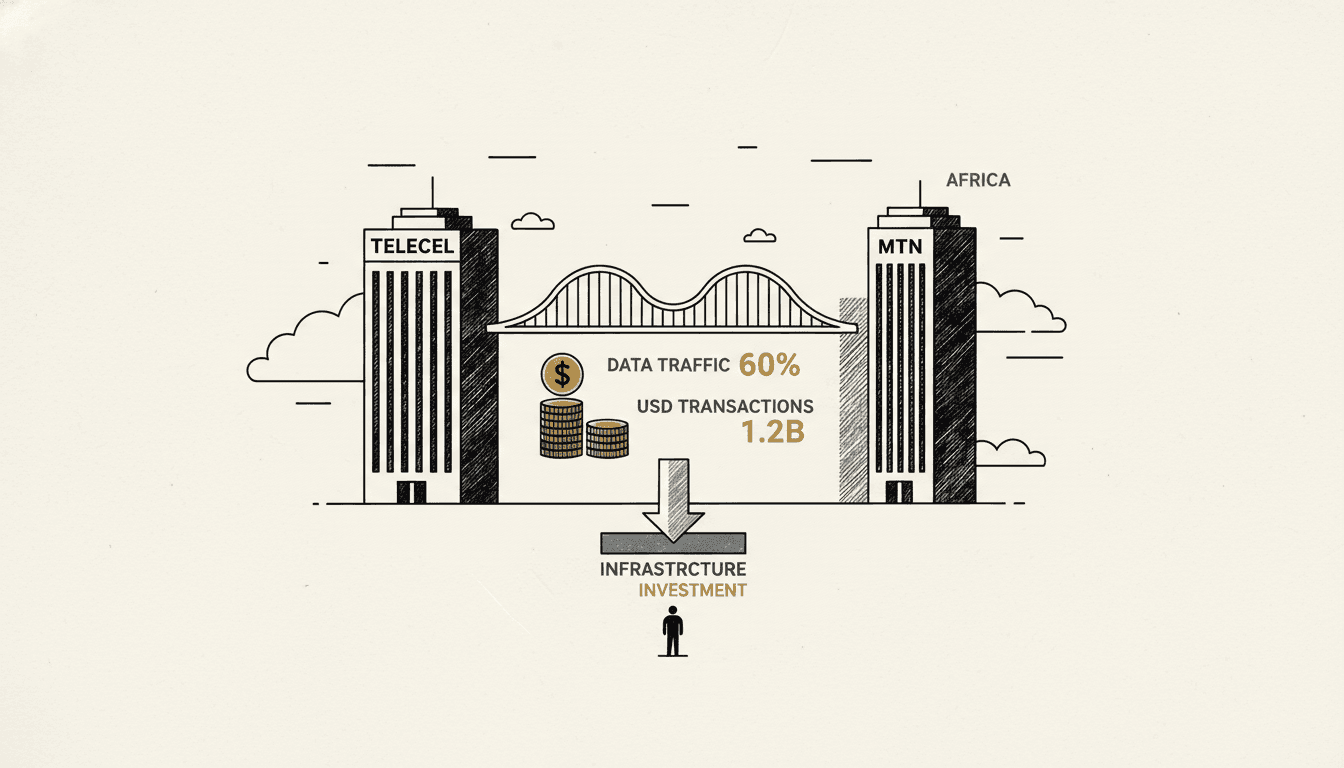
Data services now account for 53.72% of telecom revenue. For the first time, they have overtaken voice. That single number tells you more about what is happening in the economy than most quarterly reports.
People are not just calling each other anymore. They are streaming, transacting, uploading, downloading, and building businesses on connections that were designed for phone calls. The network was built for one thing and is now being asked to do something entirely different. The question is whether the companies that own the pipes can rebuild them fast enough.
Telecel has announced a 150% increase in network infrastructure investment for 2026. The company currently operates roughly 5,000 sites across the country. The plan is to expand that to approximately 9,000. That is an aggressive target for a single year. It means new towers, new fibre runs, new base stations in areas that have been underserved or unserved. If Telecel executes, it changes the competitive map. If it does not, the announcement joins a long list of telecom promises that looked better in a press conference than on the ground.
MTN, meanwhile, has committed USD 1.1 billion in capital expenditure to Ghana over three years. The money is earmarked for data centres, network expansion, and digital skills programmes. MTN already dominates the market. This spending is designed to keep it that way. Data centres matter because they determine where computation happens. If the data stays on servers in Johannesburg or Frankfurt, the country collects connectivity revenue. If it stays here, the country collects something closer to real value.
The digital skills component is worth watching separately. MTN has signalled that it sees its future not just as a connectivity provider but as a platform company. Platforms need developers, and developers need training. Whether MTN's skills programmes produce the kind of talent the ecosystem actually needs, or simply create a marketing line item, depends on design choices that have not been made public.
Together, these two investment plans represent the largest concurrent infrastructure push in the telecom sector in over a decade. But spending money and building useful things are not the same activity.
The country has 26.3 million internet users, representing 74.6% penetration. Mobile money penetration sits at 67%, with over 80% of adults using the service at least occasionally. Digital payments surged 53.8% in volume, from GHS 2.7 trillion to GHS 4.1 trillion. These numbers describe a population that has already moved its economic life onto digital rails. The infrastructure has to follow.
Coverage gaps remain visible. Drive an hour outside any regional capital and the signal weakens. Some communities still operate on 2G. Businesses in Tamale do not have the same connectivity as businesses in East Legon, and that gap has economic consequences. Telecel's site expansion matters most in these places, not in Accra where coverage is already dense.