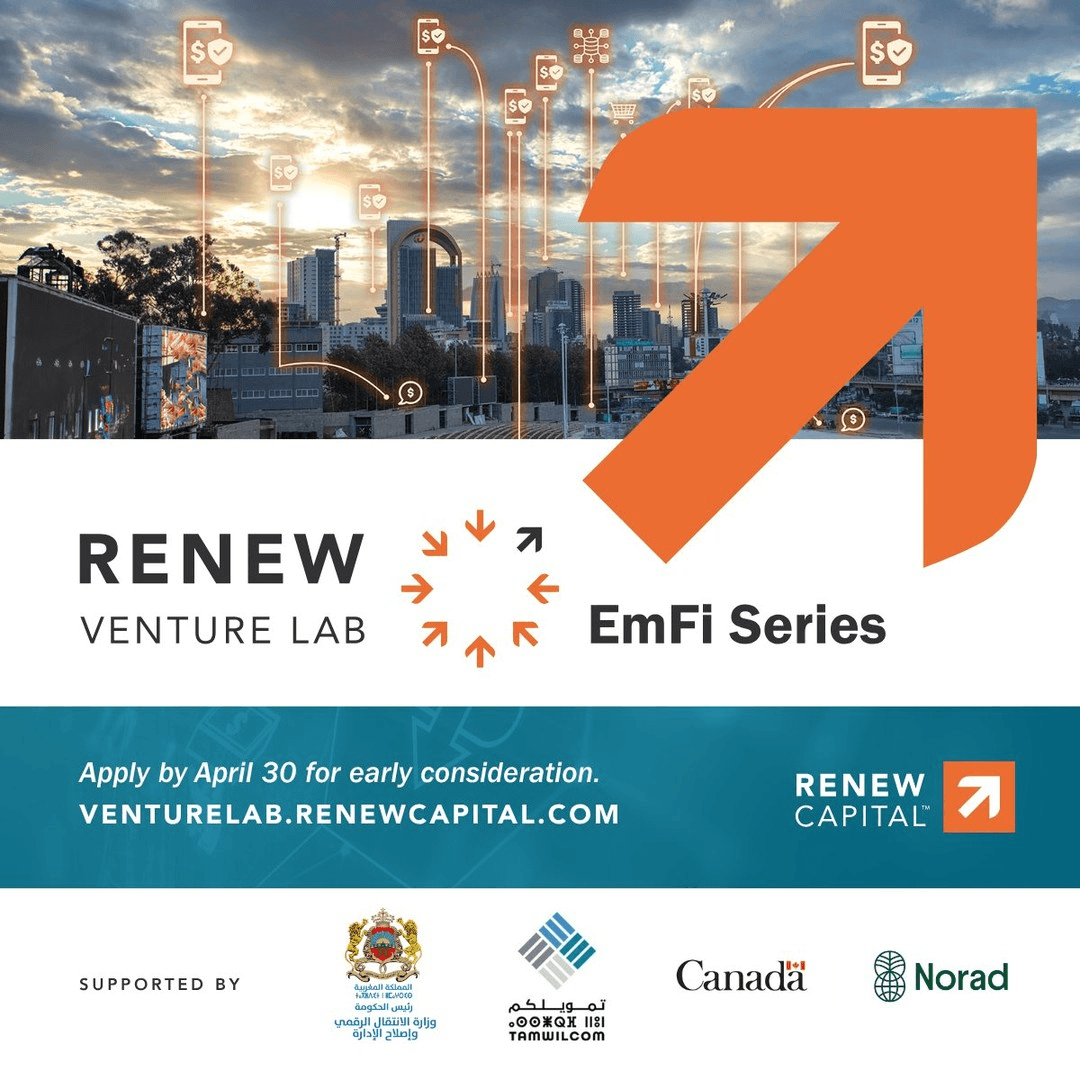
Renew Capital has published a new investment thesis built around Africa's SME credit gap, framing the opportunity as $330 billion of unmet credit demand that founders with the right distribution and underwriting infrastructure can unlock.
The fund, founded by Matt and Laura Davis in 2012 and now deploying across 13 African countries, is positioning itself to back a specific kind of early-stage company: the tech-enabled or tech-led operator that can turn part of that gap into a working credit product.
The $330 billion number is not Renew Capital's own research. It tracks closely with the International Finance Corporation's own published estimate of the African SME financing gap, which the IFC has been carrying in the $300 to $331 billion range across its recent small-business finance reports.
Oxford Law Blogs cited the same figure in its December 2025 analysis of private credit's emerging role in African financing. It is, in other words, a well-documented TAM number that anyone making an SME credit play in Africa can legitimately cite.
The thesis question is not whether the gap exists. It is whether early-stage venture capital is the right instrument to close it.
Here is why we believe the question is worth asking in the specific form Renew is posing.
The first is that African SME credit has historically been a debt problem that equity investors tried to solve. Fintech-style lending businesses like Fido in Ghana, Lulalend and Moniepoint's SME credit arm, and Migo have all raised substantial equity rounds in exchange for the operational capacity to deploy debt into the SME market.
The equity funds the customer acquisition and the technology build; the actual credit extended to SMEs comes from a separate balance sheet, usually a partner bank or a warehouse facility from a DFI. Renew's positioning of the opportunity as a venture-capital-backable thesis is consistent with that pattern.
The second is that the credit-gap framing papers over a structural fact about SME lending in Africa: the reason the gap has persisted is not primarily a distribution problem. It is an underwriting and collections problem.
SMEs in most African markets do not have the financial records, collateral, or credit history that standard bank underwriting models require, and the recovery infrastructure for loans gone bad is slow and expensive. A fintech that can reach an SME in rural Kumasi with a mobile app still has to answer the underwriting and collections questions the bank up the road could not answer.
The best operators in the space (again, Fido and Moniepoint are the domestic examples Ferviddy readers will recognise) solved the underwriting side through alternative data and the collections side through automated direct debit arrangements and tight customer relationships.
Those solutions took years to develop and have not yet been proven at the scale the $330 billion gap implies.

The third is the operating footprint question for Renew specifically. The fund operates across 13 African countries and has a Ghana-adjacent positioning, but its most concentrated deal activity has been in East Africa and the Horn, with its Addis Ababa base reflecting Matt Davis's extended operational history in Ethiopia.
A pivot toward West African SME credit would require either opening or deepening a Ghana and Nigeria presence. The fund has deployed in both markets before but has not led many of the headline SME credit rounds that have defined the space over the past three years.
Its thesis pivot is therefore partly a repositioning exercise and partly a strategic capital commitment, depending on how aggressively the team builds local presence to match the new narrative.
The Ghana-specific read on Renew's thesis is mixed.
On the one hand, the country's SME credit gap is real and large, and the existing domestic instruments Ci-Gaba, the GIP platform with its new Norfund and Axis Pension commitment, and the EBID wholesale facility coming through commercial banks are addressing the capital side of the problem, not the borrower reach side. A Renew-backed founder building a product that reaches SMEs the banks cannot economically serve would sit alongside rather than compete with those instruments.
On the other hand, the most promising Ghanaian SME-lending operators are already funded. The question is whether Renew can find the next cohort before someone else does.
The pitch that would be worth writing is the one that specifies the gap between "market exists" and "we can fund the company that closes it." Renew's published positioning does not yet do that work, in the sense that the $330 billion TAM is the universal cover of every African SME credit pitch deck and a founder does not actually benefit from the investor framing the opportunity that broadly.
What Ghanaian founders would benefit from is specificity about which segments, which underwriting approaches, and which unit economics the fund is willing to back. That kind of specificity is what turns a thesis into a live investment pipeline.
What to watch: whether Renew publishes named portfolio additions in the SME credit space over the next two quarters, whether any of those additions are Ghana-based, and whether the fund opens or deepens a West Africa team to match the new narrative.