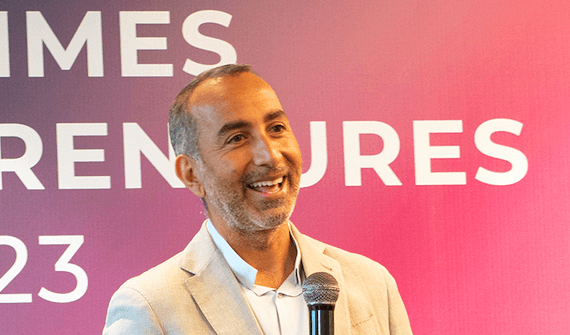
The April commentary on Hassanein Hiridjee's position inside Jumia Technologies is the analyst class catching up to a fact that has been on the cap table since August.
Axian Telecom, the Mauritius-headquartered Madagascan-founded telecoms group Hiridjee chairs, holds 24.4 million ordinary shares of Jumia, equivalent to about 12.2 million American Depositary Shares. That is 9.97 percent of the company's outstanding stock, worth approximately $110 million at the August reference price. That made Axian Jumia's largest single shareholder.
Hiridjee was appointed to the Supervisory Board in August 2025 by petition of Jumia's Management Board to a Berlin court, with the appointment running until the company's 2026 annual general meeting.
Three months later, Bloomberg reported that Axian was exploring a full acquisition.
The bond market validated the position when Axian raised approximately $600 million in a 2025 issuance whose use of proceeds left analysts assuming part of the capital was earmarked for either a Jumia takeover or a financing facility around it. By December, Hiridjee was telling reporters that telecoms infrastructure would be the backbone of African artificial intelligence.
That is the kind of statement a CEO makes when he is preparing the market for a strategic story that involves merging telecoms infrastructure with adjacent digital assets.
An article on Launch Base frames it better, "Hassanein Hiridjee's outsized stake reshapes power at Jumia Technologies,"; this does not announce a new transaction, it just marks the moment when the publicly available facts about the stake-build, the board appointment, the bond raise, and the public statements from Axian's principal can be read together as a single transition rather than as discrete news items.
The analyst class has been slow on this. Hiridjee has been moving fast.
Jumia operates in Ghana under a regional structure that has historically been managed from Lagos and reported into the broader Jumia West Africa segment. Ghana is one of the company's four core African markets, alongside Nigeria, Kenya, and Côte d'Ivoire.
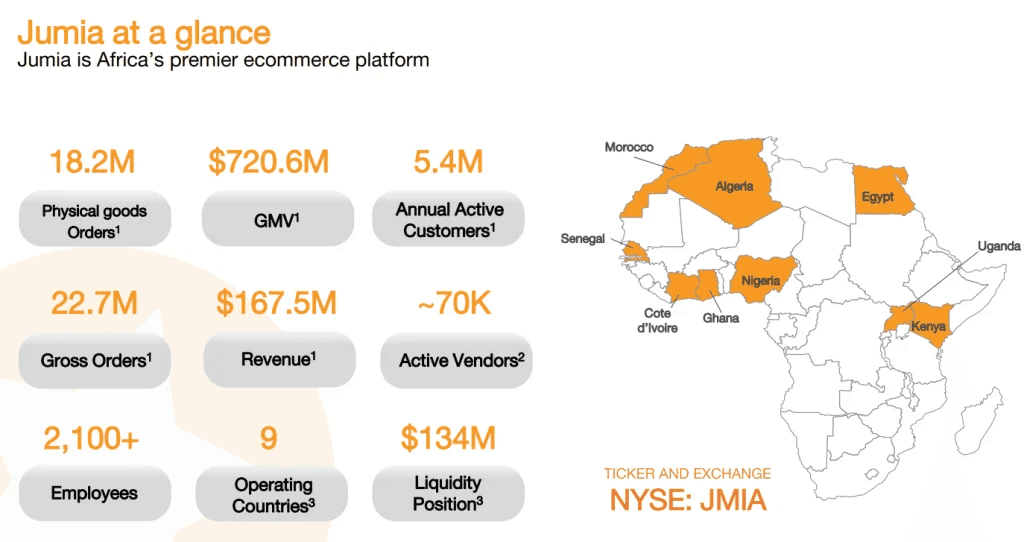
A change of control at the parent (whether through a board takeover, a friendly tender offer, or an outright acquisition) would reshape how Jumia Ghana sources, prices, and warehouses inventory; how it interacts with local payment partners; and which categories the company prioritises during the transition. None of those operating decisions has been signalled publicly. None of them is independent of what happens to the parent.
Ferviddy will be following three things.
The first is what an Axian-led Jumia would actually look like. Axian's existing footprint includes telecoms operations across multiple African and Middle Eastern markets, mobile money under the Yas Money brand in Madagascar and other geographies, and tower infrastructure through a joint venture with Helios Towers.
Combining that with Jumia's e-commerce footprint produces a vertically integrated digital commerce stack: the buyer is on an Axian SIM, paying through an Axian mobile money wallet, ordering on a Jumia marketplace, with the order routed across infrastructure Axian controls is a thesis a strategic investor would underwrite. It is also a thesis that requires Jumia's existing operating businesses to survive the transition without losing the scale that makes the integration worth executing.
The second is what the Jumia minority shareholders make of all this. Jumia has been a public company on the New York Stock Exchange since 2019. Its shareholders include institutional investors who bought into the company at much higher valuations in the 2019-2021 window and have lived through several rounds of strategy resets, restructurings, and management changes. A takeover bid would need to clear those shareholders at a premium to the current trading price.
A creeping acquisition that walks Axian's stake up over time without a formal tender offer would be a different mechanism with different disclosure obligations under SEC and German corporate law (Jumia's parent is registered in Germany). Either path is more procedurally complicated than the headline framing of "outsized stake reshapes power" implies.
The third is the question of whether Jumia's current management stays. CEO Francis Dufay has been running the company since late 2022 and has been credited with the cost rationalisation that produced the 2024 narrowing of losses. A new controlling shareholder typically wants to install its own operating team. Dufay's record over the past 18 months is the best argument for continuity.
Whether Hiridjee values continuity over strategic alignment is the question that will be answered by the post-2026 AGM management changes, or by the absence of them.
For a Ghanaian operator watching this from outside, the practical question is narrower. Jumia Ghana is the country's largest cross-border e-commerce gateway and one of the most important channels for SMEs trying to reach customers in regional markets without setting up their own logistics. A Jumia under Axian control would be a more strategic, less commercially neutral platform than the existing one.
Whether that is good or bad for a Ghana SME depends on which sectors Axian prioritises, which payment partners survive the transition, and whether the platform's commission structure stays competitive.