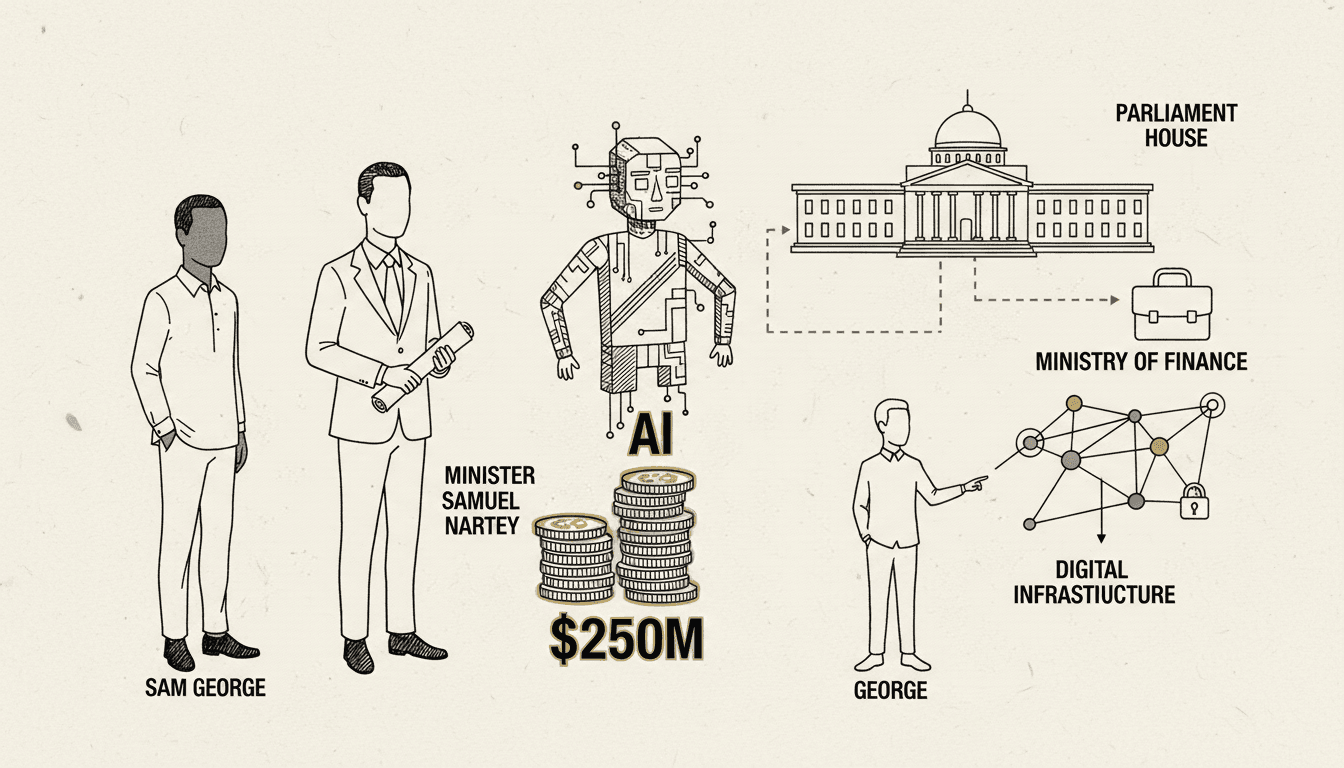
Fifteen reform bills. A $250 million artificial intelligence centre. The One Million Coders Programme. A formal bid for the African Union's ICT Committee chairmanship, submitted at MWC 2026 in Barcelona. Samuel Nartey George, the Minister for Communications, Digitalisation and Cyber Security, is moving at a pace that makes it difficult to dismiss the agenda as rhetoric.
The legislative programme alone would be significant in isolation. Fifteen bills covering data protection, cybersecurity, electronic transactions, and the governance of emerging technologies represent the most comprehensive overhaul of digital regulation in three decades. Some of these laws have not been updated since the early internet era. The gaps are not theoretical. They show up every time a fintech needs regulatory clarity, every time a data breach goes unaddressed, every time cross-border digital commerce runs into legal ambiguity.
George has framed this as a "deliberate digital reset" under President Mahama. The framing matters because it signals coordination rather than isolated ministry action. The $250 million AI centre, if executed, would be the largest single investment in AI infrastructure on the continent. The One Million Coders Programme targets the supply side: building the workforce that would actually staff the companies and agencies this digital economy requires.
The AU ICT Committee chairmanship bid adds a continental dimension. At MWC 2026, George formally submitted letters of intent to the African Union. If successful, the position would give the ministry a seat at the table where continental digital policy is shaped, including decisions on data sovereignty, spectrum allocation, and cross-border digital trade frameworks.
The risk with this level of ambition is execution. Fifteen bills need parliamentary time, drafting capacity, and stakeholder consultation. A $250 million centre needs funding, land, and technical partners. A million coders need curriculum, instructors, and jobs waiting on the other end. Each of these is a multi-year project. Launching them simultaneously either reflects serious institutional capacity or sets up a situation where none of them finish properly.
George has the political backing and the public profile. Fifteen bills need parliamentary time before the 2028 election cycle narrows the legislative window. The first batch is scheduled for committee review in Q3 2026.