The Public Interest and Accountability Committee released its 2025 annual report on 8 April, and two findings in it deserve to be read together.
The first: Tullow Ghana signed a $205 million deal in February to buy the FPSO Prof. John Evans Atta Mills from Japanese marine contractor MODEC on behalf of the TEN joint venture. PIAC flagged the acquisition as a risk, given that the TEN field is in persistent decline and national oil production has fallen for six consecutive years.
The second: GNPC subsidiary Explorco has failed to remit $561.6 million in petroleum revenue owed to the Republic of Ghana for the period 2022 to 2024. That money should have been deposited into the Petroleum Holding Fund under the Petroleum Revenue Management Act. GNPC maintains that Explorco's revenues are not obligated to go into the fund. PIAC disagrees and is considering Supreme Court action.
The governance question is straightforward: if the state's own petroleum entities cannot account for $561 million in existing revenue, what is the basis for committing $205 million in new capital to a declining asset?
The deal
The TEN fields — Tweneboa, Enyenra, and Ntomme — sit in the Deep Water Tano contract area offshore Ghana. Tullow operates at 54.84 percent. GNPC holds 20.95 percent. Kosmos Energy holds 20.38 percent. PetroSA holds 3.82 percent.
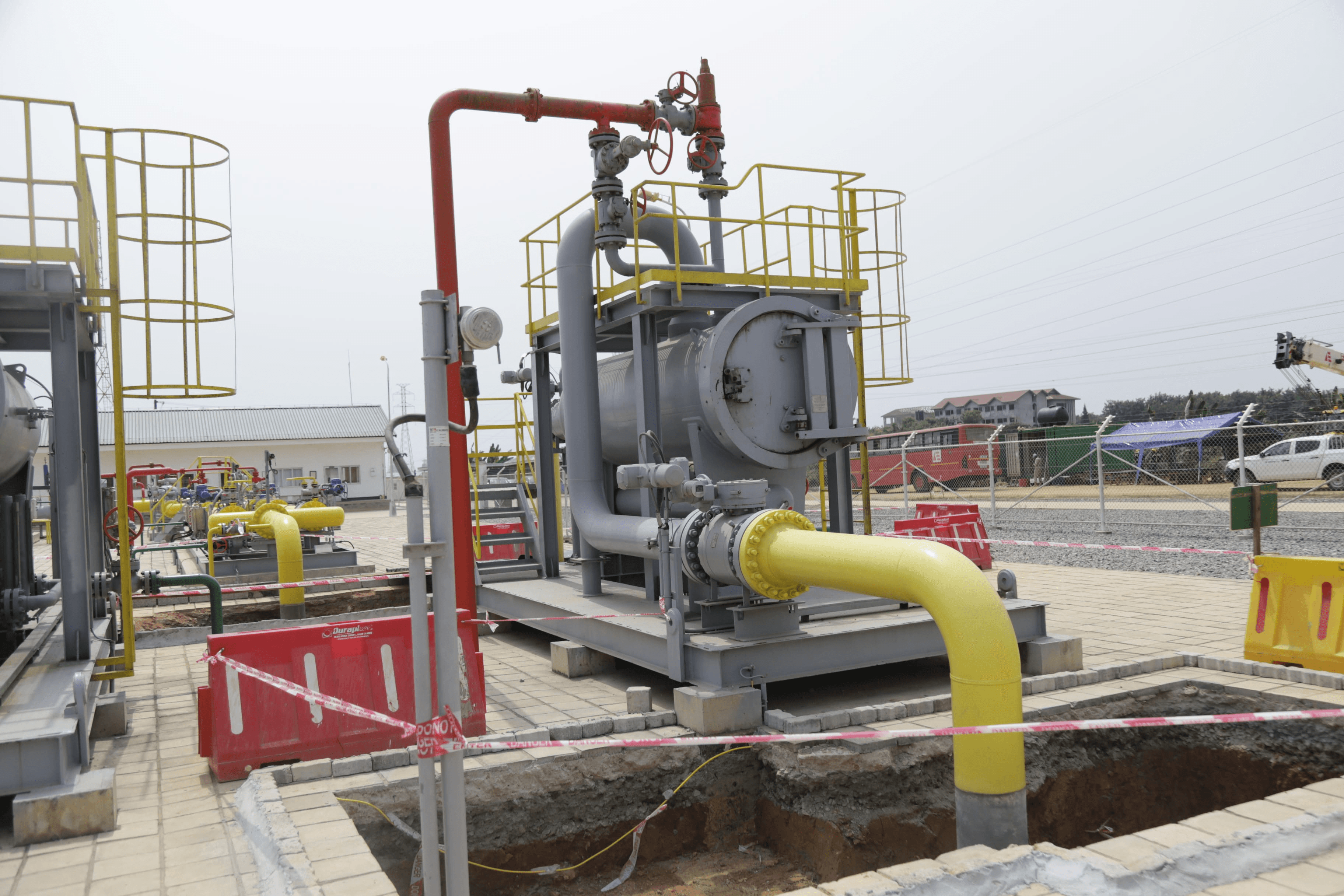
The FPSO was built by MODEC and achieved first oil in August 2016 under a 10-year charter. That charter was approaching expiry. Tullow says its net share of the purchase price, approximately $125.6 million, is broadly equivalent to one year of its current lease cost on the vessel. The acquisition eliminates annual lease payments permanently.
Parliament ratified the extension of the DWT petroleum agreement through December 2040 in February 2026, authorising up to 20 additional wells and approximately $2 billion in capital spending across both Ghana fields. The legal framework for the acquisition is in place.
The production problem
TEN produced 5.83 million barrels in 2025, down 14 percent from 6.78 million in 2024. Daily output averaged approximately 16,200 barrels. Gas reinjection at TEN runs at 81 percent, indicating limited gas offtake capacity and suboptimal reservoir management.
Across all three fields, Ghana produced 37.3 million barrels in 2025, down from a peak of 71.4 million in 2019. Jubilee, the flagship, fell 30.3 percent to 22.2 million barrels. Total petroleum receipts into the Petroleum Holding Fund dropped 43 percent to $770.3 million. PIAC Chairman Richard Ellimah said the pace of decline is a national concern.
PIAC estimates the six-year production decline has cost Ghana 34.14 million barrels valued at approximately $1.7 billion.
GNPC's capacity to pay
GNPC's share of the $205 million at its 20.95 percent stake is approximately $42.9 million. The corporation received only $107.89 million in 2025 for equity financing and participating interest obligations, a 61.55 percent drop from prior years caused by the government's reduction of GNPC's share of net carried and additional participating interest from 30 percent to 15 percent.
PIAC warned that GNPC's financial viability is threatened by involvement in government-backed loans and non-core infrastructure projects. It urged Parliament to insulate GNPC and Explorco from non-petroleum obligations.
The counterargument
Tullow's case is that the acquisition eliminates a recurring lease cost that exceeds the purchase price within roughly one year, resets fixed operating costs, and extends the economic life of TEN by removing a major overhead. The $2 billion investment programme authorised by Parliament includes drilling that could arrest the production decline. The J-74 producer well at Jubilee came online in early 2026 and reportedly exceeded 10,000 barrels per day at initial rates.
Whether the drilling programme reverses six years of decline at TEN specifically — not just at Jubilee — is the question PIAC is asking.
The $205 million bet on the FPSO makes sense if TEN's production stabilises. If the decline continues, the vessel serves a shrinking output base at a cost the joint venture has now capitalised rather than expensed.