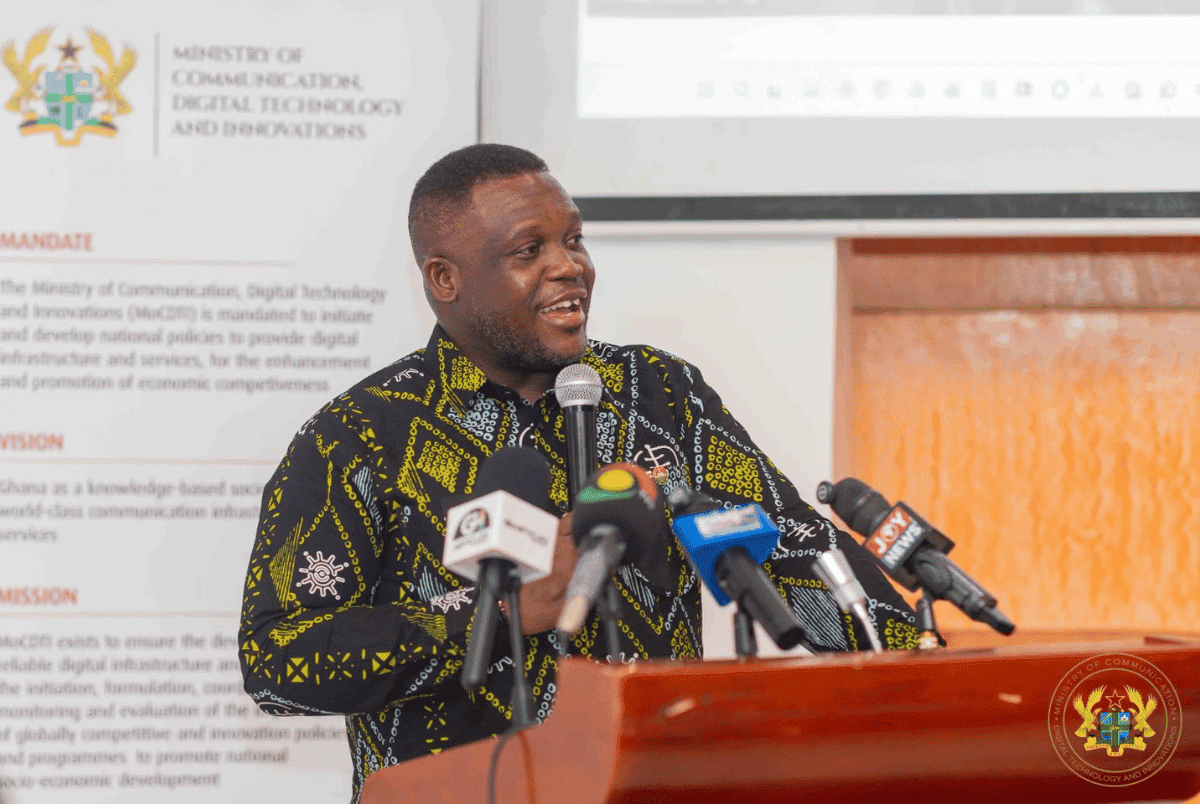
Cabinet has approved a $250 million (approximately GHS 2.7 billion) national AI computing centre and a ten-year National AI Strategy running from 2023 to 2033.
Communications Minister Samuel Nartey George made the announcement on 31 March at a National Stakeholder Engagement on the country's AI Readiness Assessment Methodology Report.
The strategy is built around eight pillars, though the ministry has not yet published the full document.
It was developed in partnership with Smart Africa, GIZ FAIR Forward, and The Future Society, a Paris- and Washington-based policy organisation focused on AI governance.
Sam George said the computing centre would give local researchers, startups, and government agencies access to high-performance infrastructure that most currently rent from foreign cloud providers. The cost of that dependence, he said, was becoming harder to justify as AI workloads grow.
"We cannot continue to export our data and import our intelligence," George said.
The readiness assessment, which informed the strategy, measured institutional capacity, data infrastructure, and the state of AI talent across the public and private sectors.
Participants at the engagement included representatives from telecoms, academia, and civil society, though several attendees said the timeline for implementation details remained unclear.
Smart Africa, which has run similar readiness exercises in over a dozen member states, said Ghana's assessment placed the country among the top five in its network for institutional preparedness. GIZ FAIR Forward contributed technical resources on responsible AI deployment, particularly around bias mitigation and data governance.
The official launch of the National AI Strategy is scheduled for 24 April 2026. The ministry has not said whether the computing centre will be built on existing government data-centre infrastructure or require a new facility.
Funding sources for the $250 million have not been disclosed.